What Is a UV DTF Transfer? The Complete Guide

If you've shopped for custom stickers or branded drinkware recently, there's a good chance you've come across the term UV DTF transfer without a clear explanation of what it actually means.
It sounds similar to standard DTF printing, but the process, the materials, and the surfaces it works on are completely different. This guide breaks down exactly what a UV DTF transfer is made of, how UV DTF printing works from start to finish, and how to apply the stickers once they arrive.
What Is a UV DTF Transfer, Exactly?
A UV DTF transfer is a full-color design printed on film, cured instantly under ultraviolet light, and finished with a peel-and-stick adhesive backing. Unlike fabric DTF transfers, which need a heat press to bond, UV DTF stickers apply with hand pressure alone, no heat, no curing equipment, no weeding.
That's what makes them a decal in the truest sense: peel the liner, press it onto a hard surface, and it's done.
It's easy to confuse UV DTF with standard DTF since both start with a design printed on film, but the similarities stop there.
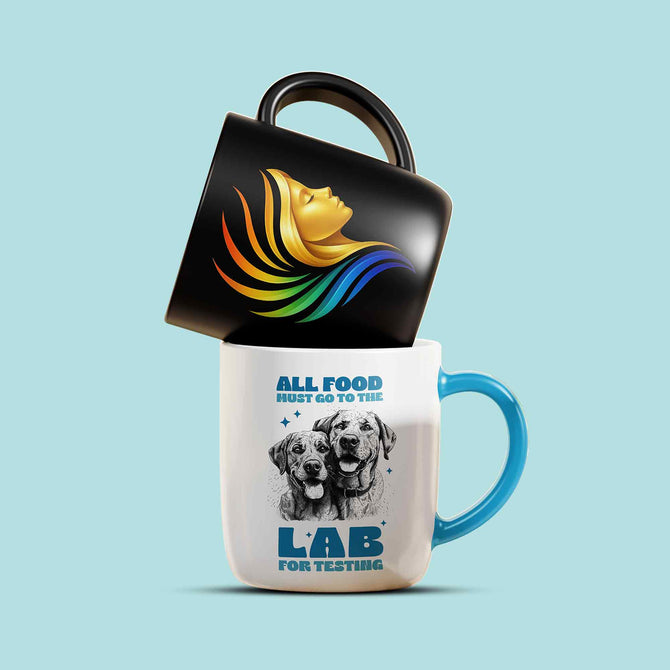
Standard DTF transfers are built for fabric and rely on adhesive powder and heat to bond into a garment. UV DTF is built for hard, non-porous surfaces like tumblers, glass, and plastic, where heat isn't an option and a permanent, water-resistant decal is.
UV DTF Stickers
Make your choice


What Is a UV DTF Transfer Made Of?
A finished UV DTF sticker isn't a single printed sheet. It's a design sandwiched between two films, usually called the A film and the B film. Each one does a specific job, and knowing which is which makes the application steps much easier to follow.
| Layer | What It Is | What It Does |
|---|---|---|
| A film | Backing film with an adhesive layer | Holds the printed design and adhesive, and is peeled off right before application. |
| UV-cured ink | Full-color UV ink, printed onto the A film | Forms the design itself, hardened instantly under UV light instead of air-drying. |
| B film | Clear top film | Laminated over the design to hold it together during application, then peeled off once the sticker is pressed down. |
Because the ink is cured under UV light rather than dried naturally, the color sets instantly and doesn't shift, fade, or smear the way some solvent-based prints can over time. That's also part of why UV DTF printing produces such vibrant, saturated color compared to other sticker methods.
How Does UV DTF Printing Actually Work?
The process runs in one continuous line, from blank film to finished decal:
- Printing: The design prints onto the A film using UV-curable inks.
- Curing: A UV lamp hardens the ink as it prints, so the color sets instantly instead of air-drying.
- Laminating: The clear B film is pressed over the printed design, sealing it between the two films.
- Applying: Peel away the A film, press the design onto the surface, then peel off the clear B film on top to reveal the finished sticker.
No heat press touches the design at any point in that sequence, which is the core difference between UV DTF printing and every fabric-based DTF process.
UV DTF vs. Standard DTF vs. Vinyl (HTV)
| UV DTF | Standard DTF | Vinyl (HTV) | |
|---|---|---|---|
| Best surface | Hard surfaces such as glass, tumblers, and plastic | Fabric such as cotton, polyester, and blends | Fabric, mostly single-color designs |
| Heat required | No | Yes, heat press | Yes, heat press |
| Full-color detail | Yes | Yes | Limited, usually cut per color |
| Application | Peel and stick | Print, powder, heat-press | Cut, weed, heat-press |
| Typical use case | Tumblers, mugs, car decals, packaging | T-shirts, hoodies, totes | Simple logos, names, numbers |
For apparel, standard DTF still offers the flexibility of fabric printing. For anything hard, curved, or non-fabric, UV DTF is the more practical option.
How to Apply UV DTF Stickers
- Clean the surface first. Wipe down the tumbler, mug, or glass with rubbing alcohol and let it dry fully. Dust or oil under the sticker is the most common cause of bubbling.
- Peel off the A film. Lift the backing slowly from one corner rather than pulling straight up, so the design stays attached to the clear top film.
- Position before you press. UV DTF adhesive bonds fast, so line the design up before it touches the surface. There's very little room to reposition once it makes contact.
- Press from the center outward. Use a squeegee, credit card, or your thumb to rub over the clear film, pushing out air bubbles as you work from the middle toward the edges.
- Peel off the clear top film. Once the design is fully pressed down, remove the B film slowly at a low angle, checking that no part of the sticker lifts with it.
- Give it time to bond, then hand-wash only. The sticker is ready to use right away, but wait 24 hours before washing it so the adhesive can reach full strength. From then on, hand-wash only and keep it out of the dishwasher to help the design last longer.
The whole process usually takes under a minute per sticker once you've done it a few times, which is part of why UV DTF has become a practical option for customizing drinkware at volume.
Why Order a UV DTF Gang Sheet
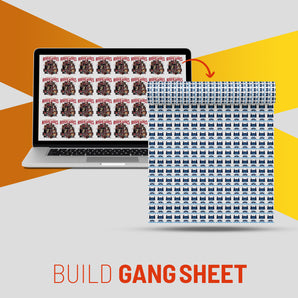
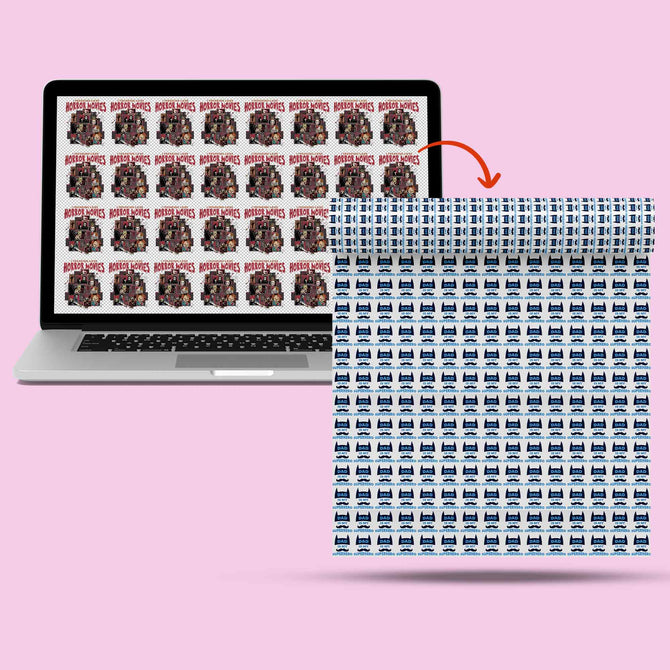
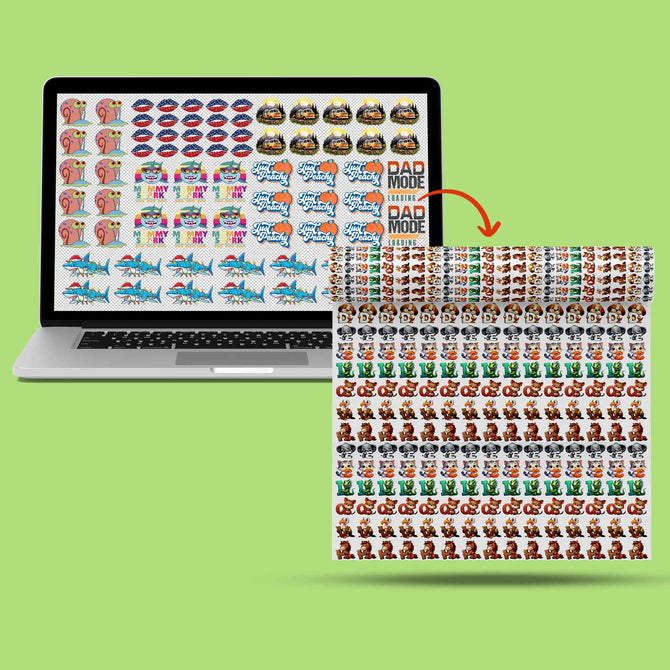
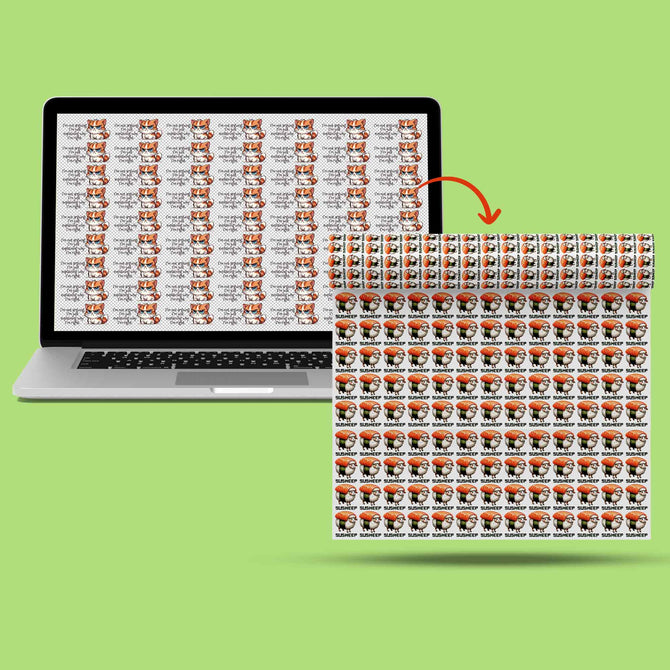
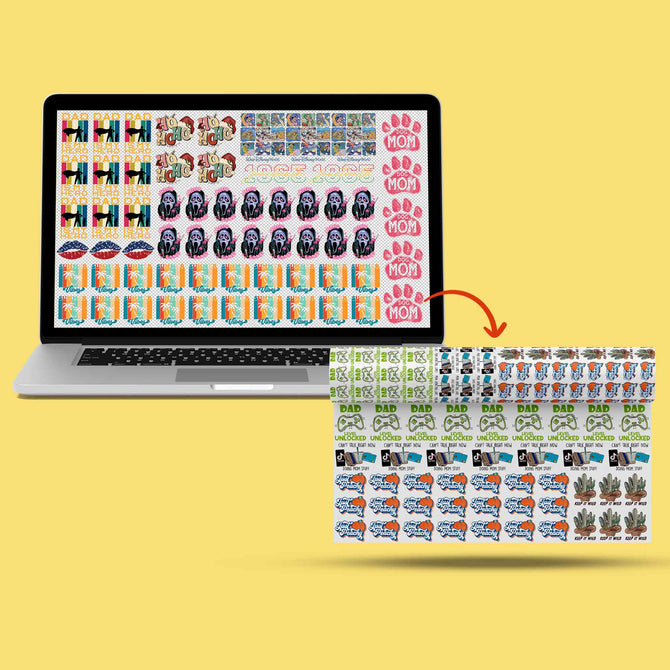
Just like fabric DTF, a UV DTF gang sheet packs multiple sticker designs onto one sheet of film instead of printing each one separately. That matters for cost, since UV DTF is priced by the square inch of film used, not by how many individual designs are on it.
A gang sheet makes the most sense when you're:
- Printing several different designs for one order or one customer
- Stocking multiple best-selling sticker designs at once
- Mixing sizes, like small logo decals alongside larger tumbler wraps, on a single sheet
Our UV DTF gang sheet builder lays everything out for you on a sized canvas, so there's no separate design software needed to combine designs before ordering.
UV DTF Stickers Wholesale: Buying in Bulk
UV DTF stickers wholesale orders come from a fairly consistent group: print shops adding hard-surface decals to their lineup, boutiques customizing drinkware for resale, and car or laptop decal sellers who need consistent color across every batch.
What they have in common is volume, and UV DTF pricing is built around that. Per-sticker cost drops as sheet size and order volume increase, the same way it does with a fabric DTF gang sheet.
If you're testing a design before committing to a bulk run, ordering UV DTF stickers by size individually is the simplest way to check color and finish before scaling up to a wholesale order.
The Bottom Line
A UV DTF transfer is a full-color design printed on film, cured under UV light, sealed between two films, and applied with nothing more than hand pressure. No heat, no powder, no weeding, just peel and stick onto glass, metal, or plastic for a durable, water-resistant finish that holds up to daily handling and gentle hand-washing.
Whether you need a handful of custom tumbler decals or a wholesale UV DTF gang sheet for resale, the process stays the same from a single sticker to a full production run. Explore the full lineup of UV DTF stickers and get your first design printed and shipped.
Ready to Print?
Custom UV DTF stickers for tumblers, glass, bottles, and other hard surfaces. No heat press. No weeding. Just peel, stick, and go.