
How to Apply UV DTF Stickers: The 2026 Professional Step-by-Step Guide

What Is This Article About?
Pressure is the new heat. While traditional transfers rely on high temperatures to bond, the secret to a permanent finish on hard surfaces lies in the precision of your application. If you have struggled with peeling edges or trapped air, learning exactly how to apply uv dtf stickers is the fastest way to upgrade your brand's physical presence. It is frustrating to watch a custom glass wrap lift after a single wash. You deserve a result that looks like it was printed directly onto the substrate.
We understand the pain of a ruined transfer. Wasted materials mean wasted profits; it is an expense no business should absorb. This guide changes that. You will master the professional no-heat application process to achieve bubble-free, industrial-strength results every single time. From meticulous surface preparation to the final high-tension peel, we are breaking down the streamlined workflow used by Richardson's top branding experts. We will show you how to handle curved surfaces and complex alignments without the stress. Let's get your production line moving with speed and precision.
Key Takeaways
- Learn how UV-curable ink and high-strength adhesives eliminate the need for heat presses on delicate hard surfaces.
- Discover the "Golden Rule" of preparation and why 70% Isopropyl alcohol is essential for permanent, wash-proof adhesion.
- Master how to apply uv dtf stickers using the professional hinge method to ensure perfect alignment and zero air bubbles every time.
- Tackle complex projects like curved tumblers and high-transparency glass with expert techniques for managing seams and fingerprints.
- Understand why partnering with a Richardson-based expert provides the durability and speed required for professional-grade commercial branding.
What is UV DTF? The No-Heat Revolution for Hard Surfaces
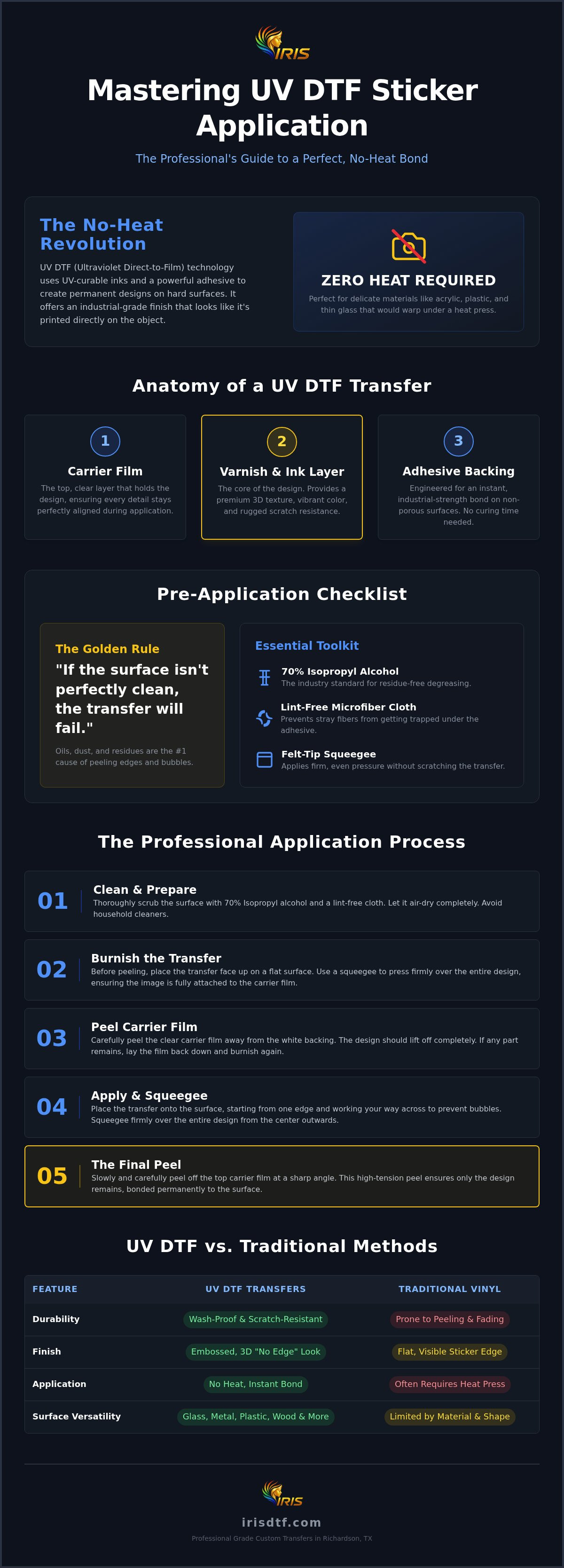
UV DTF is the future of hard-surface branding. It stands for Ultraviolet Direct-to-Film. This technology combines specialized UV-curable inks with a high-strength adhesive. Unlike traditional transfer methods, it requires zero heat. This is a massive advantage for materials that would melt, warp, or crack under a heat press. Think about acrylics, certain plastics, or thin glass. It provides a finish that looks and feels like it was printed directly onto the substrate. When you master how to apply uv dtf stickers, you gain an immediate professional edge.
Traditional vinyl often peels at the corners after a few washes. Solvent stickers scratch easily and fade in the sun. UV DTF is built for a different standard. It's industrial. It handles friction and moisture without flinching. This versatility makes it the go-to choice for almost any non-porous surface including glass, stainless steel, finished wood, and electronics. It's fast. It's durable. It works.
The Anatomy of a UV DTF Transfer
Every professional transfer consists of three critical layers designed for maximum performance. Understanding these layers helps you understand why the bond is so permanent. The construction includes:
- The Carrier Film: This holds the design in place during transport. It ensures every fine detail remains sharp until the moment of application.
- The Varnish Layer: This is the secret to the premium look. It creates a signature 3D embossed texture and provides rugged scratch resistance for high-use items.
- The Adhesive Backing: Engineered for instant bonding. It grips non-porous surfaces with industrial force. No waiting for a cure. No heat required. Just a permanent stick.
Why Richardson Brands are Switching to UV DTF
Local businesses in the DFW area are moving away from expensive screen printing for small batches. The setup costs are simply too high for limited runs. UV DTF offers a more efficient, cost-effective path. From small-scale promotional items to massive corporate gift orders, this technology scales with your needs. It's the perfect solution for personalized tumblers, tech accessories, and branded hardware. You get industrial-grade durability without the massive overhead or long wait times.
If you want to dive deeper into the technical specifications, check out our UV DTF transfers guide for a full breakdown of the science. Knowing how to apply uv dtf stickers correctly ensures these high-quality transfers last for years, not weeks. It is about precision and reliability. Richardson entrepreneurs choose this method because it works as hard as they do.
Pre-Application Checklist: Preparing Your Surface for Maximum Adhesion
Preparation is the foundation of a permanent bond. The Golden Rule of UV DTF is simple: if the surface isn't clean, the sticker won't stick. You can have the highest quality transfer in the world, but it will fail on a greasy or dusty substrate. This is where most beginners struggle. They rush the process. They skip the wipe-down. They end up with peeling edges within forty-eight hours. Clean is the only standard that matters.
To get professional results, you need the right kit. Don't improvise with household rags or generic cleaners. You will need:
- 70% Isopropyl alcohol: The industry standard for degreasing without leaving residue.
- A lint-free microfiber cloth: Essential to ensure zero fibers remain on the surface.
- A felt-tip squeegee: This provides firm, even pressure without scratching the varnish layer.
Surface compatibility is your next check. UV DTF thrives on non-porous materials like glass, metal, and hard plastics. While it can work on some matte finishes, glossy surfaces provide the most aggressive bond. Avoid porous materials like raw wood or unsealed ceramic. Also, check the temperature. If your substrate is cold to the touch, the adhesive won't "grab" correctly. Warm it up to room temperature first. Learning how to apply uv dtf stickers starts long before you peel the film.
The Deep Clean Process
Finger oils are the enemy. Even if a surface looks clean, it's likely covered in invisible residues. Use your alcohol and cloth to scrub the application area thoroughly. Never use Windex or standard glass cleaners. These often contain ammonia or silicone. These ingredients leave a slick film that prevents the adhesive from biting into the surface. Once cleaned, let it air-dry completely. Trapped moisture is a recipe for bubbles and premature lifting.
Handling Your Stickers Before Application
Your transfers are professional-grade tools. Treat them that way. Store your UV DTF stickers in a cool, dry place. The Texas sun is brutal. It can degrade the adhesive if left in a hot vehicle or near a bright window. Before you peel, inspect the "A" and "B" films. Ensure the design is fully seated on the carrier. A pro tip: trim your transfers before you start. Leaving a small margin around the design gives you a "handle." This prevents your fingers from touching the adhesive during the critical alignment phase. Master these basics, and you will see why knowing how to apply uv dtf stickers is a game-changer for your brand's production speed.
Step-by-Step Guide: How to Apply UV DTF Stickers Like a Pro
Precision matters. You have cleaned the surface. You have trimmed the design. Now, we execute. Mastering how to apply uv dtf stickers requires a steady hand and a methodical approach. This is not about speed; it is about accuracy. Follow these steps to ensure a flawless, industrial-grade bond every time.
Start with positioning. For flat surfaces, use the "Hinge Method." Place your sticker on the substrate and secure one side with a piece of painter's tape. This creates a fixed pivot point. It eliminates the risk of misalignment when you start the actual bond. You get to see exactly where the design will land before the adhesive touches the surface.
Next, flip the transfer over and peel the backing paper (Film B) away. Do this at a sharp 180-degree angle. Keep the film flat against itself as you pull. If any part of the design stays on the backing, stop. Press it back down, rub it firmly, and try again. Once the backing is off, you face the "one-shot" reality. UV DTF adhesive is aggressive and permanent. Once it touches the substrate, it cannot be moved without damaging the transfer. Lower the design slowly from your hinge point, letting it roll onto the surface to prevent large air pockets.
The Rubbing Technique
Grab your felt-tip squeegee. Start in the dead center of the design and work your way outward in overlapping strokes. This methodical movement pushes air toward the edges, ensuring a bubble-free finish. Pay close attention to fine lines, small dots, and sharp corners. These high-detail areas need extra focus to ensure edge-to-edge adhesion. It is the physical pressure, not heat, that activates this industrial-strength bond. Keep your heat gun away; the pressure of the squeegee is the only catalyst required for a permanent result.
Troubleshooting the Peel
The final reveal is the most critical stage. Peel the clear carrier sheet (Film A) slowly and carefully. We recommend a "low and slow" approach at a 45-degree angle. This angle provides the safest release for the design. If you notice a detail lifting with the film, do not keep pulling. Lay the carrier sheet back down and re-apply heavy pressure with your squeegee. Occasionally, you might see a slight ghosting or adhesive residue on the surface after the peel. Don't panic. A quick, gentle wipe with a dry microfiber cloth will remove any remaining tackiness, leaving a clean, 3D embossed finish. Learning how to apply uv dtf stickers with this level of care separates amateur DIY projects from professional-grade branding.
Pro Tips for Tricky Surfaces: Mastering Curves, Glass, and Bubbles
Flat surfaces are a great starting point, but real-world branding often involves complex geometry. Branding a tapered tumbler or high-transparency glass requires more than a steady hand. It requires strategy. If you want to know how to apply uv dtf stickers to difficult shapes without wrinkles or overlaps, you need to understand how the film behaves under tension. Precision in the preparation phase prevents failure in the final reveal.
Glass application presents its own set of hurdles. Transparency is unforgiving. Any fingerprint or speck of dust trapped under the adhesive will be visible from the opposite side. Handle the transfer by the edges only. If you find a stubborn bubble after the peel, don't try to rub it out; you might shift the design. Instead, use a surgical pin-prick at the edge of the bubble and gently press the air out with your finger. It is a professional fix that leaves the design looking flawless and factory-printed.
Curing is the final, non-negotiable step. While the bond feels instant, the adhesive continues to set and cross-link for hours. We recommend a full 24-hour wait before the item is handled heavily or exposed to moisture. This patience ensures the industrial-grade bond reaches its maximum potential. Rushing this stage is the leading cause of premature peeling on high-use items.
Managing Curved and Tapered Items
Tapered water bottles and coffee mugs are notorious for "darting" or film wrinkles. The solution is the "Snip" technique. Make small, strategic cuts in the clear carrier film, staying well away from the design itself, to allow the film to flex and overlap without affecting the sticker. Always start your application at the most prominent part of the curve and work your way down. This prevents the design from "walking" or becoming crooked. To avoid a messy overlap seam on full wraps, trim your transfer so the edges meet perfectly rather than stacking on top of each other.
Long-Term Care and Durability
Performance matters. Our 2026 testing confirms that UV DTF remains the superior choice for high-use items. It handles the intense Texas sun in Dallas and Frisco without fading or cracking. While these stickers are rugged, we always advise hand-washing to extend the life of the branding. High-heat dishwasher cycles can eventually soften the adhesive bond over hundreds of cycles. For those looking to brand fabrics instead of hard surfaces, explore our Custom DTF Transfers pillar for the best apparel solutions.
Ready to start your next project? Order your UV DTF stickers from our Richardson facility today. We specialize in precision tools for local DFW entrepreneurs who demand results. Knowing how to apply uv dtf stickers with these pro tips ensures your brand stays permanent and professional.
Get Custom UV DTF Transfers in Richardson: Quality You Can Trust
Mastering how to apply uv dtf stickers is only half the battle. You need a transfer that stands up to the high standard of your craftsmanship. Iris DTF provides that foundation. We are the preferred partner for businesses across the Dallas-Fort Worth metroplex. Our Richardson facility produces industrial-grade stickers that don't just stick; they perform under pressure. We understand the local market because we are part of it.
Local pickup in Richardson is a strategic advantage for your business. Shipping delicate transfers often leads to bent carrier sheets or adhesive contamination during transit. When you choose a local partner, you eliminate those variables. You skip the shipping wait and the potential for damage. Swing by our shop and get your materials into production immediately. It is about maintaining momentum in your branding process. Knowing how to apply uv dtf stickers correctly is much easier when the film arrives in pristine condition.
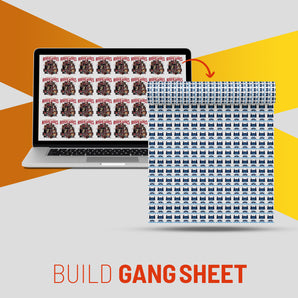
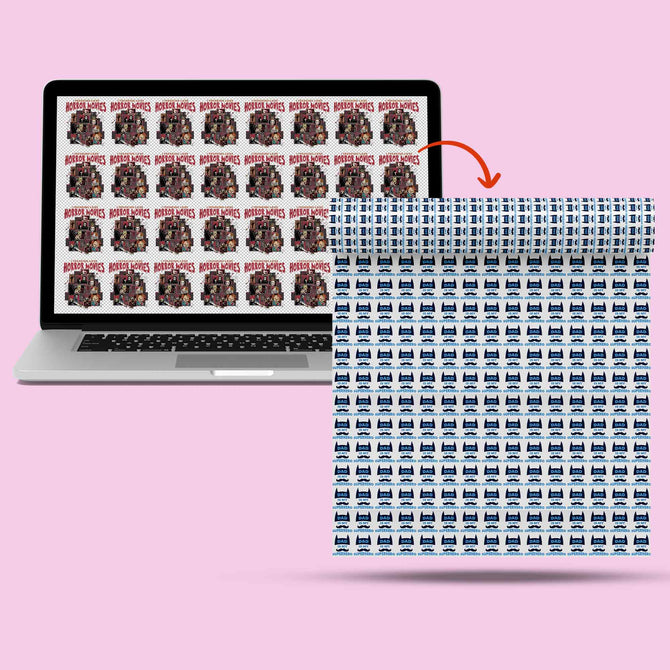
Quality is non-negotiable. Our high-resolution prints ensure every fine line and gradient in your logo pops with clarity. We utilize advanced UV-curable inks that create that signature 3D embossed feel customers love. Our gang sheets offer unmatched versatility for growing brands. You can mix your UV DTF stickers and custom apparel transfers in a single order. This level of efficiency helps you manage inventory while keeping your branding consistent across hard surfaces and fabric.
Ordering Made Easy for DFW Creatives
Our process is built for speed. Upload your artwork through our portal and our Richardson-based team will perform a comprehensive technical check. We look for resolution issues or transparency errors before we hit print. This prevents wasted materials and ensures your final product is perfect. We proudly serve the entire metroplex, from the corporate offices in Plano to the creative hubs in Irving. If you are looking for the best DTF near me, our facility is centrally located for your convenience.
Ready to Start Your Project?
We are ready when you are. Our team maintains a "ready-to-work" attitude that prioritizes your deadlines. We offer some of the fastest turnaround times in the industry without compromising on the industrial-grade quality you expect. Iris DTF has over 10 years of expertise in digital transfers. Visit our UV DTF product page today to start your order. Let's build something durable together. Your brand deserves the precision and reliability that only a local expert can provide.
Upgrade Your Brand with Industrial-Grade Precision
You now have the professional blueprint for branding success. By focusing on deep cleaning with 70% isopropyl alcohol and utilizing the hinge method for perfect alignment, you can eliminate wasted materials and ruined transfers. Mastering how to apply uv dtf stickers is a direct path to creating high-value, durable products that your customers will love. It is about the right technique combined with the right technology. Precision in the process leads to perfection in the result.
Iris DTF is here to support that growth. Our Richardson-based facility is equipped with high-durability 2026 adhesive technology, specifically designed to withstand heavy use and the intense Texas sun. We bring over 10 years of industry expertise to every gang sheet we print, ensuring your brand pops with high-resolution clarity. We are more than just a supplier; we are your local partner in production excellence. We handle the technical details so you can focus on your creative vision.
Order Your Custom UV DTF Stickers from Iris DTF Today!
Stop worrying about peeling edges and start building a permanent professional presence. Your brand deserves a bond that lasts as long as your reputation.
Frequently Asked Questions
Can I apply UV DTF stickers to t-shirts or fabric?
No. UV DTF stickers are engineered specifically for hard, non-porous surfaces like glass, metal, and plastic. If you need to brand apparel, you should use our Custom DTF Transfers instead. Those utilize a heat-activated adhesive designed for textiles. Applying a UV sticker to a t-shirt results in a stiff, non-breathable print that will likely peel during the first wash. Choose the right tool for your substrate.
Are UV DTF stickers dishwasher safe?
Yes, they are highly water-resistant. However, we recommend hand-washing to maximize the lifespan of your branding. The intense heat and high-pressure steam in modern dishwashers can eventually soften the adhesive bond after repeated cycles. For promotional items and corporate gifts, a gentle hand-wash keeps the 3D varnish layer looking fresh and vibrant for years. It is about protecting your investment in high-quality branding.
Do I need a heat press to apply UV DTF transfers?
No heat press is required. You should never use heat during the application process. These are pressure-sensitive transfers. The bond is activated by firm rubbing with a squeegee or your fingers. This cold-application process makes them perfect for heat-sensitive items like acrylic or thin plastics. Learning how to apply uv dtf stickers is significantly faster and safer than traditional heat-press methods for hard substrates.
How long do UV DTF stickers last on a car window?
They are built for industrial-grade durability. Our 2026 adhesive formula is specifically designed to resist UV rays and extreme temperature fluctuations. You can expect them to last several years on a car window, even in the brutal Dallas heat. They won't fade or crack like traditional paper stickers. Just ensure the glass is clinical-level clean before application to prevent premature lifting at the edges.
What is the difference between UV DTF and regular vinyl decals?
The main difference lies in the construction and finish. Regular vinyl is a single layer of colored material that requires tedious weeding. UV DTF is a multi-layer transfer including a 3D varnish that gives an embossed, premium feel. It handles much finer details than vinyl cutters can manage. There is no weeding involved. You get a professional, printed look with higher scratch resistance and a more aggressive permanent bond.
Can I use UV DTF on textured or powder-coated surfaces?
Yes, but with caution. UV DTF adheres well to lightly textured surfaces and most powder coatings. However, very aggressive or sandy textures provide less surface area for the adhesive to grab. This can lead to air pockets and peeling. If you are branding a textured tumbler, apply extra pressure with your squeegee to ensure the adhesive sinks into the low spots. Always test a small sample first.
What should I do if my UV DTF sticker has bubbles after application?
Don't try to peel the sticker back up. Once the adhesive touches the surface, the bond is permanent and peeling will ruin the design. Instead, use a fine sewing needle or a hobby knife to make a tiny pin-prick at the edge of the bubble. Gently press the air out toward the hole with your finger. This surgical fix is invisible and restores the flat, professional finish without damaging the print.
Is there a local shop for UV DTF in Dallas or Richardson?
Iris DTF is your local Richardson powerhouse. We produce all our transfers right here in our Texas facility. Local businesses across the DFW metroplex prefer us for our fast turnaround and local pickup options. You can skip the shipping delays and the risk of transit damage. Our team brings over 10 years of expertise to every project. We are ready to help you master how to apply uv dtf stickers for your brand.