

How to Start a T-Shirt Business with DTF: The Ultimate 2026 Startup Guide

What Is This Article About?
What if the secret to building a six-figure apparel brand isn't actually owning the printer, but simply mastering the press? Most entrepreneurs think they need to drop $15,000 on high-end machinery just to get started. They worry about clogged print heads, complex graphic design software, and whether their designs will survive the first wash. You've likely felt that same hesitation. It's exhausting to navigate the technical hurdles when all you want to do is create and sell.
The good news is that the industry has shifted. This guide will show you exactly how to start a t-shirt business with dtf in 2026 without the massive overhead of traditional shops. You can achieve professional-grade results that compete with global brands using just a reliable heat press and a smart production engine. We'll walk through the essential equipment for every budget, from home-based setups to production-level powerhouses. You'll also learn how to use gang sheet optimization to keep your profit margins between 40% and 70%. We're breaking down the path from your first press to a scalable, high-durability clothing line that's built to last.
Key Takeaways
- Discover why DTF technology is the superior choice for 2026 startups, offering unmatched versatility across cotton, polyester, and nylon fabrics.
- Learn how to start a t-shirt business with dtf by leveraging outsourced transfers to avoid the high costs and maintenance of industrial printing equipment.
- Identify the essential startup checklist, focusing on a high-quality heat press as your primary investment for professional-grade results.
- Master the use of gang sheets to maximize your print space and secure profit margins between 40% and 70% per garment.
- Scale your brand faster by utilizing local Richardson-based production for rapid turnaround times and expert support in the Dallas-Fort Worth area.
Why DTF is the #1 Choice for T-Shirt Startups in 2026
Learning how to start a t-shirt business with dtf begins with understanding the core technology. Direct-to-Film (DTF) printing is a digital process where designs are printed onto a specialized PET film and then transferred to garments using a heat-melt adhesive powder. By 2026, this technology has matured to offer a softer hand-feel and superior stretch compared to older methods. It's the bridge between hobbyist crafting and industrial production. The 2026 edge lies in improved ink chemistry and anti-static film coatings that ensure precision even in high-volume runs.
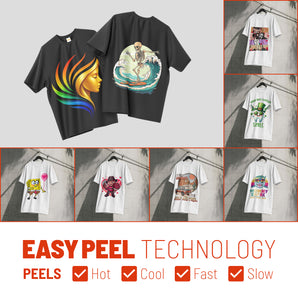
Versatility is the primary reason entrepreneurs are flocking to this method. Traditional vinyl feels heavy and restricted; heat transfer paper often cracks after a few laundry cycles. High-quality DTF transfers are different. They're specialized for high-durability 50+ wash cycles, ensuring your customers stay happy long after the purchase. You aren't limited by fabric types either. Whether you're pressing onto 100% cotton, polyester gym wear, or rugged nylon bags, the results remain consistent. The secret is the white ink layer. It acts as a powerful primer, allowing vibrant colors to pop on dark fabrics without any transparency issues.
DTF vs. Screen Printing vs. DTG
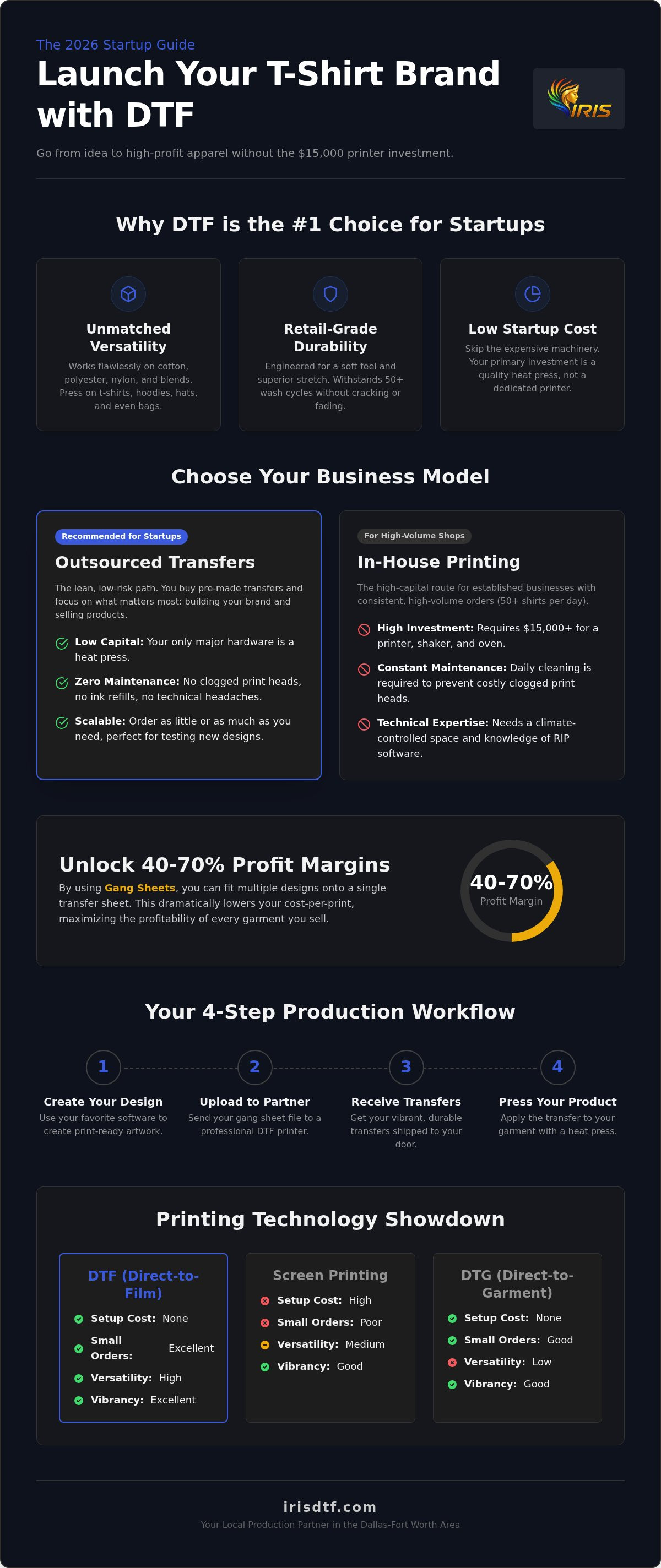
Why is this the "sweet spot" for new brands? Screen printing is legendary for quality, but it's too expensive for multi-color orders under 50 pieces due to high setup costs. Direct-to-Garment (DTG) printers offer digital flexibility, yet they're notorious for maintenance headaches and clogged print heads. DTF provides the professional, retail-ready finish of screen printing with the zero-setup-fee advantage of digital. You only pay for the designs you need. This allows you to test new designs without financial risk.
Low Barrier to Entry: The Side-Hustle Advantage
You don't need a massive factory to compete with big brands. A spare bedroom or a clean garage provides plenty of space for a startup. When you adopt an outsourced production model, you don't even need to store chemicals or install complex ventilation systems. You simply focus on marketing and sales while a production engine like Iris DTF handles the technical printing. This lean approach lets you scale your brand quickly. It's the most efficient way to master how to start a t-shirt business with dtf while keeping your overhead low and your profit margins high.
Choosing Your Business Model: In-House vs. Outsourced Transfers
Deciding how to start a t-shirt business with dtf often comes down to one question: should you buy the printer or buy the prints? Many beginners fall into the "Printer Trap." They assume owning the hardware is the only way to maximize profit. In reality, the real cost of ownership includes expensive RIP software, specialized ink, and constant maintenance. If a printer sits idle for even forty-eight hours, the white ink can clog the heads. This leads to costly repairs before you've even made your first sale.
As you calculate your startup costs, look beyond the initial sticker price. Risk mitigation is vital for long-term success. Most startups fail because they over-invest in hardware before they have a steady stream of customers. By outsourcing, you shift your focus from technical troubleshooting to high-value activities like marketing and sales. You become the brand architect, not the repair technician. This lean approach allows you to scale at your own pace without the pressure of a massive equipment loan.
The In-House Printing Model (High Capital)
This model requires a significant upfront investment and a dedicated, climate-controlled workspace. You'll need humidifiers to keep the ink flowing and specific ventilation for the curing process. A full setup includes the DTF printer, an automated powder shaker, and a curing oven. You also need technical expertise in color profiling and daily head cleanings. This path is best for established shops producing fifty or more shirts every single day. If your volume is lower, the maintenance costs and ink waste will likely eat your margins.
The Outsourced Transfer Model (Low Capital)
This is the smartest entry point for 2026 entrepreneurs. The workflow is streamlined. You upload your designs to a professional partner; they print the film and ship it to your door. You simply press the design onto your garment. Starting with custom dtf transfers allows you to fulfill orders immediately with zero technical overhead. You can source these directly from Iris DTF to ensure retail-ready quality every time.
Profit margins remain impressively high here. Industry data shows that a shirt costing roughly $6 to produce can easily sell for $25 or more. That is a 70% margin without the stress of printer downtime. As you scale, you can transition to high-value gang sheets to drive your unit costs even lower. This model provides the agility needed to grow a profitable brand from a home office or small garage.
The Essential Startup Checklist: Equipment and Blanks
Setting up your production floor requires precision. When learning how to start a t-shirt business with dtf, your primary capital investment is a high-quality heat press. Forget the cheap hobbyist irons. You need consistent heat and even pressure across the entire platen to ensure the adhesive bonds correctly. A clam-shell press is excellent for tight spaces. A swing-away model offers better access and more even pressure for thicker garments like hoodies. This is the one tool where you shouldn't cut corners. It's the engine of your business.
Your reputation depends on the quality of your blank apparel. If the shirt shrinks or fades, the transfer quality won't matter. You also need the right software and file prep. High-resolution files are non-negotiable. Always aim for 300 DPI in a PNG-24 format with a transparent background. Vector files remain the gold standard for crisp lines, while raster files are necessary for photographic designs. Blurry art leads to a blurry brand.
Don't overlook the small essentials. These minor tools prevent major mistakes and ensure every shirt is retail-ready:
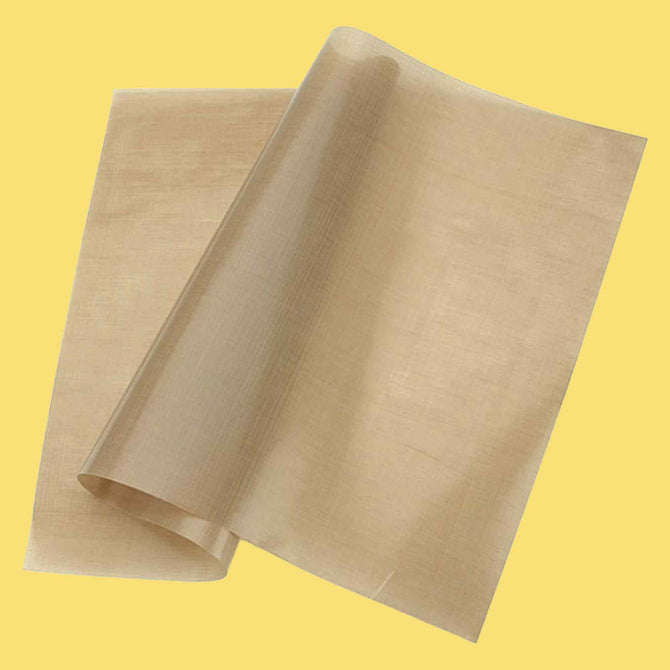
- Teflon sheets or parchment paper: Protects your press and garments from ink residue or scorching.
- Heat tape: Prevents the transfer from "ghosting" or shifting when the press opens.
- Laser temp gun: Verifies that your heating element is accurate and consistent across the whole plate.
- Lint roller: Removes dust and fibers that can cause "pinholes" or texture issues in the transfer.
Selecting Your T-Shirt Blanks
Brand aesthetic starts with the fabric. Comfort Colors offers that vintage, lived-in feel that dominates the lifestyle market. Shaka Wear provides the boxy, heavyweight "streetwear" look that is currently surging. For a reliable, retail-fit standard, the Next Level 3600 remains the industry favorite. In the Dallas-Fort Worth area, 2026 trends show a distinct split. Lightweight cotton is essential for the Texas summer, while heavyweight blanks are the go-to for premium streetwear drops in Plano and Allen. Match the garment weight to your customer's lifestyle.
Workspace and Safety Setup
Your workspace must be functional and safe. A heat press draws significant power. Ensure you aren't sharing a circuit with other high-draw appliances to avoid tripping breakers. Use a stable, heavy-duty table that can withstand the downward force of a manual press. Finally, keep a lint roller on hand. A single piece of debris under a transfer can ruin a finished product. Clean garments lead to professional results. Efficiency starts with an organized station.
Mastering the Workflow: From Design to Finished Product
Excellence in the custom apparel industry is born in the workflow. While previous sections covered equipment and business models, the technical execution of the print is what defines your brand's longevity. Understanding how to start a t-shirt business with dtf requires a commitment to design precision. Start with high-resolution artwork at 300 DPI. Background removal is critical; any stray pixels or "halos" will be printed and powdered, leading to messy edges. Always export your files in PNG-24 format to preserve transparency and color depth. This step ensures the white ink layer perfectly tracks your design.
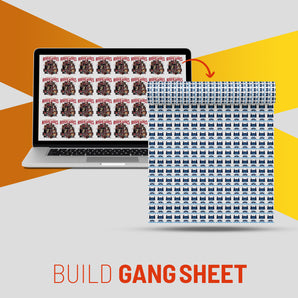
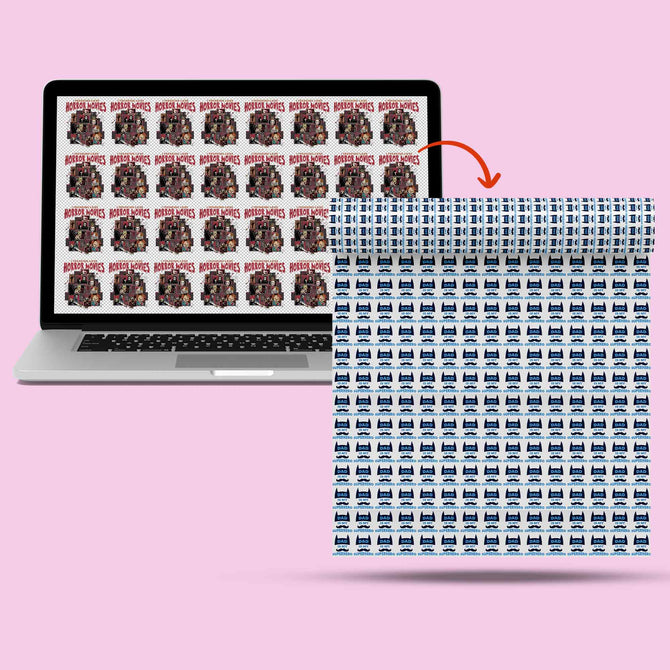
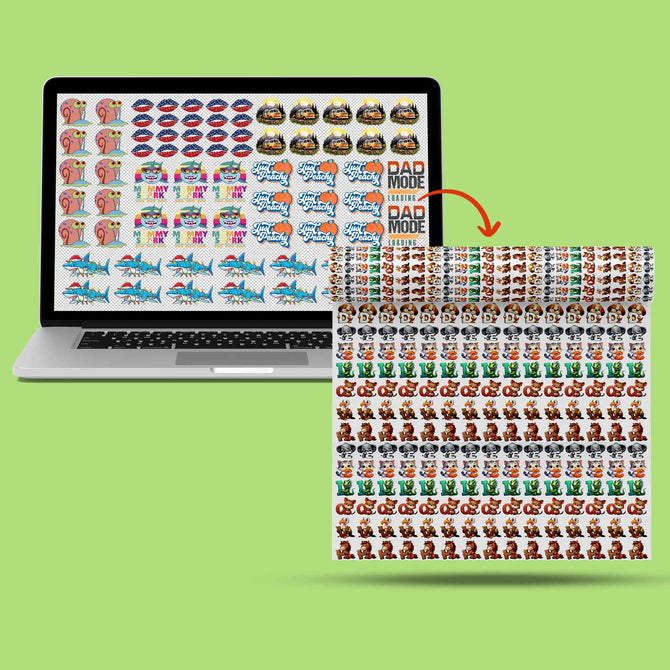
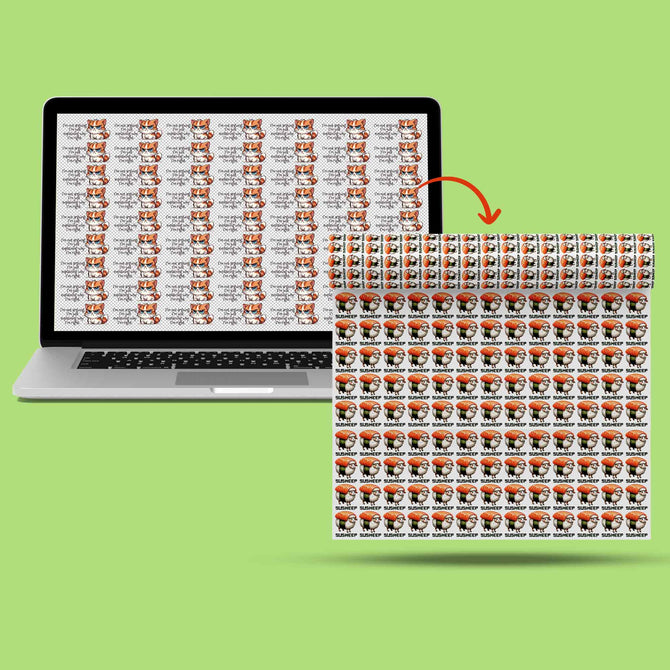
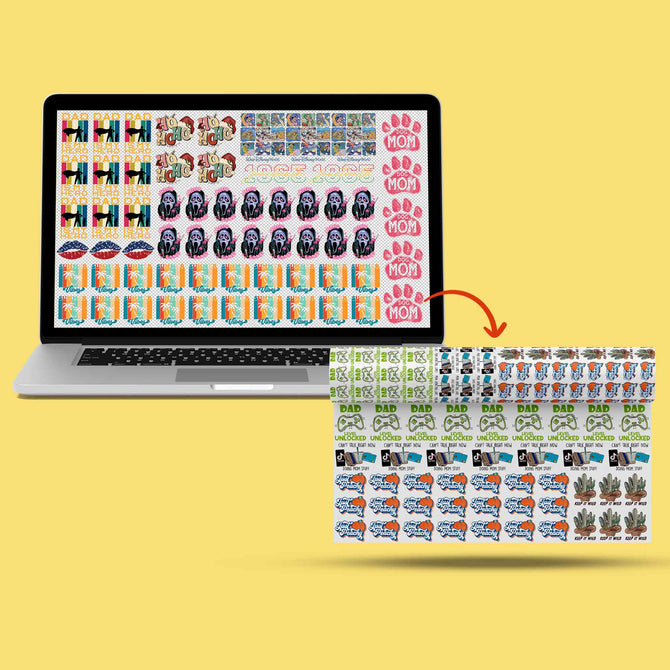
Maximizing profit margins is the next priority. Instead of ordering individual prints for every shirt, savvy owners utilize dtf gang sheets. This method involves nesting multiple designs onto a single roll of film. It drastically reduces your cost of goods sold. You can arrange main chest pieces, small neck labels, and sleeve logos all in one space. Gang sheets allow you to print 20+ designs for the price of one, turning every square inch of film into revenue.
The Art of the Gang Sheet
A gang sheet is your most powerful tool for scaling. By grouping different orders or various sizes of the same logo, you eliminate wasted film. This is especially useful for "brand packs" where you need a consistent look across hoodies, tees, and hats. Precision layout software helps you tightly pack these designs. This approach transforms a simple t-shirt project into a high-capacity production line. It's the most efficient way to handle bulk orders without increasing your labor time.
Pressing Instructions for Professional Results
Precision during the heat press stage separates amateur hobbyists from professional brands. Follow this five-step sequence for guaranteed results:
- The Pre-Press: Press the garment for 5-8 seconds to remove all moisture and wrinkles. Skipping this causes the transfer to fail during the first wash.
- The Main Press: Set your press between 300°F and 320°F. Apply medium-to-heavy pressure for 12-15 seconds.
- The Peel: Follow your supplier’s specific PET film instructions. Some films require a "cold peel" where the garment must be completely cool, while others allow for a "hot peel" immediately after pressing.
- The Post-Press: This is the most important step for durability. Place a finishing sheet over the design and press again for 5-10 seconds. This locks the ink into the fibers.
Standard settings provide a baseline, but always verify your heat with a laser temp gun. If edges don't adhere, it's usually due to uneven pressure or a cold spot on your platen. Consistent execution ensures your transfers survive 50+ wash cycles without cracking or peeling. Ready-to-work processes lead to guaranteed customer satisfaction.
Scaling Your Brand with Iris DTF in the Dallas-Fort Worth Area
Your growth strategy is only as strong as your supply chain. Once you master how to start a t-shirt business with dtf, your next major hurdle is speed. Waiting a week for overseas shipping kills your momentum. It prevents you from saying "yes" to last-minute opportunities. Iris DTF serves as your local production engine right here in North Texas. This proximity transforms your brand into a high-capacity powerhouse. Local manufacturing means more control and faster delivery for your customers. It's about being ready to work when the market moves.
Local Support for Richardson and Beyond
The Richardson Advantage is a game-changer for entrepreneurs in Plano, Allen, and Dallas. Having a local facility means you can opt for local pickup to avoid shipping delays entirely. This is essential for dtf printing richardson tx when urgent event orders arrive on short notice. You aren't just buying a product; you're building a relationship with a partner that has ten plus years of industry expertise. This local expertise ensures your transfers are specialized for high-durability fifty plus wash cycles. Supporting Texas-based manufacturing also strengthens your community roots. It creates a reliable, industrious loop of creative and commercial success that feels both professional and personal.
Future-Proofing Your Business
Scaling doesn't stop at t-shirts. To become a full-service branding agency, you must diversify your offerings. You can expand your reach by using uv dtf transfers for hard surfaces like hats, mugs, and custom stickers. This technology allows you to apply professional branding to almost any substrate without investing in expensive new machinery. It's the ultimate way to maximize the value of every customer interaction. One client becomes a source for apparel, promotional items, and corporate gifts.
You can also implement a "Pre-Order" model to eliminate inventory risk. Sell your designs first; order the exact number of transfers you need second. This lean methodology keeps your cash flow healthy and your workspace organized. As your volume increases, our wholesale support ensures your costs stay competitive. We grow as you grow. Our Richardson facility is designed to handle massive commercial demands and small-scale individual projects with the same level of precision. This pioneer spirit ensures we remain focused on modern, innovative solutions for your brand.
Ready to take the next step in how to start a t-shirt business with dtf? Order your first custom DTF gang sheet today!
Launch Your Custom Apparel Empire Today
The landscape of custom apparel has shifted toward speed, precision, and durability. You now have the complete blueprint for how to start a t-shirt business with dtf without the burden of industrial equipment maintenance. By focusing on high-quality blanks and mastering the heat press workflow, you can build a brand that competes with global retail standards. Success in 2026 is about lean operations and professional results. Your focus should remain on design and marketing while a reliable production engine handles the technical heavy lifting.
Iris DTF is ready to power your growth with specialized transfers guaranteed for 50+ wash cycles. We offer the flexibility of no minimum order quantities and the speed of Richardson local pickup for our DFW partners. This allows you to scale your inventory in real-time and meet urgent customer demands with confidence. Your creative vision deserves a partner that values efficiency as much as you do. The tools are ready, and the market is waiting for your unique voice.
Start your business today with custom DTF transfers from Iris DTF. Let's build something lasting together.
Frequently Asked Questions
How much does it cost to start a t-shirt business with DTF in 2026?
Starting a home-based business typically requires an investment between $2,000 and $3,000 if you buy a desktop printer. However, the most efficient way to learn how to start a t-shirt business with dtf is the outsourced model. Your main cost is a professional heat press, which ranges from $300 for budget models to $2,850 for high-end units. This lean approach eliminates expensive ink and film inventory, letting you focus your capital on marketing and sales.
Do I need a special printer to use DTF transfers?
You don't need a specialized printer if you choose the outsourced business model. While industrial DTF printers can cost upwards of $15,000, you can bypass this expense by ordering ready-to-press transfers. This strategy avoids the "Printer Trap" of daily maintenance and technical troubleshooting. All you need is a reliable heat press to apply professional-grade designs to your garments, making it the fastest path to launching your brand in 2026.
How long do DTF transfers last on a t-shirt?
High-quality DTF transfers are engineered for extreme durability and typically last for 50 or more wash cycles. Unlike traditional heat transfer paper that often cracks or vinyl that can peel over time, these transfers bond deeply with the fabric fibers. They maintain vibrant colors and a soft hand-feel even after heavy use. This longevity is a key reason why digital transfers are the preferred choice for premium streetwear and high-performance athletic brands.
Can I use a home iron to apply DTF transfers?
A home iron isn't recommended for professional results because it can't provide the consistent heat and heavy pressure required for a permanent bond. DTF adhesive powder needs a specific temperature, usually between 300°F and 320°F, held steadily across the entire design. Using an iron often leads to cold spots and uneven application, which causes the transfer to peel after a few washes. Invest in a dedicated heat press to ensure retail-ready quality.
What is a gang sheet and how does it save me money?
A gang sheet is a single roll of transfer film that contains multiple designs nested together to maximize space. This method significantly lowers your cost of goods sold by allowing you to print dozens of logos, neck labels, and sleeve hits for the price of a single print run. It is the most effective way to scale your production. By optimizing your layout, you reduce film waste and increase your overall profit margins per garment.
What is the best fabric for DTF printing?
One of the greatest advantages of this technology is its ability to adhere to almost any fabric. While 100% cotton remains a classic choice for custom tees, DTF performs exceptionally well on polyester, nylon, and various synthetic blends. It is perfect for performance activewear and rugged workwear that traditional methods struggle to handle. Whether you're pressing onto a soft cotton blend or a stretchy gym shirt, the transfer remains flexible and durable.
Where can I get DTF transfers near me in Dallas?
Iris DTF provides local support and rapid production from our facility in Richardson, TX. We offer convenient local pickup options for entrepreneurs in the Dallas-Fort Worth metroplex, including Plano, Allen, and Dallas. Sourcing locally eliminates the long wait times and high costs associated with overseas shipping. This proximity allows you to fulfill urgent event orders and restock your inventory quickly, giving your business a significant competitive advantage in the local market.
Is DTF better than vinyl for a t-shirt business?
DTF is generally superior to vinyl because it offers a thinner, softer feel and supports unlimited colors and fine details. Heat transfer vinyl requires "weeding," which is a labor-intensive process that limits your design complexity. DTF transfers are printed digitally, meaning you can reproduce complex gradients and photographic images with ease. They are also more durable over time, making them the better choice for building a professional and scalable apparel brand.