DTF Gang Sheet for T-Shirts: The 2026 Guide to Maximizing Value

What Is This Article About?
Stop paying for empty space and start scaling your profit margins immediately. If you aren't using a dtf gang sheet for t-shirts, you're likely overspending on every single garment you produce. We understand the frustration of high individual transfer costs and the headache of inconsistent quality from low-end providers. It's a common bottleneck that holds back ambitious apparel brands. You deserve a printing partner that moves as fast as your business does.
This 2026 guide promises to show you how to maximize every square inch of your printing film to slash costs while maintaining elite quality. You'll learn the technical standards required for 300 DPI resolution and how to ensure your prints remain vibrant for 50+ washes. We're covering everything from smart layout techniques to leveraging our high-capacity Richardson facility for the fast turnaround you need to stay competitive. It's time to transform your creative vision into a streamlined, high-output success story.
Key Takeaways
- Learn how to leverage a dtf gang sheet for t-shirts to slash production costs by up to 60% compared to buying individual transfers.
- Master the technical setup for 300 DPI files to ensure every logo on your roll has professional-grade clarity.
- Discover how to maximize every square inch of film by grouping different designs and sizes into a single, high-efficiency layout.
- Get the industry-standard heat press settings required to produce vibrant garments that withstand 50+ washes without fading.
- Leverage the speed of a Richardson-based powerhouse to get your products to market faster with reliable local pickup and shipping options.
What is a DTF Gang Sheet for T-Shirts?
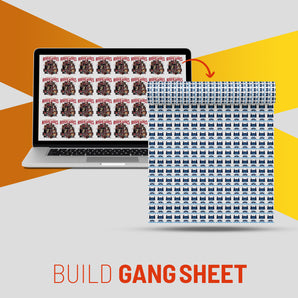
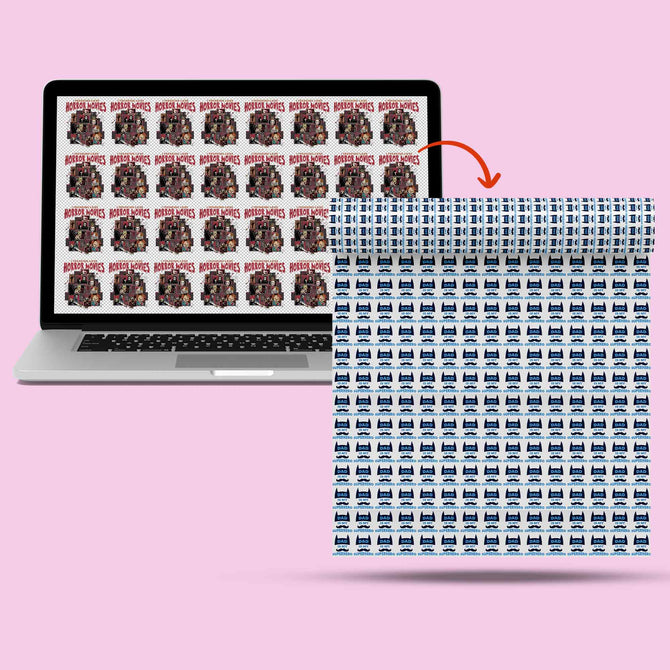
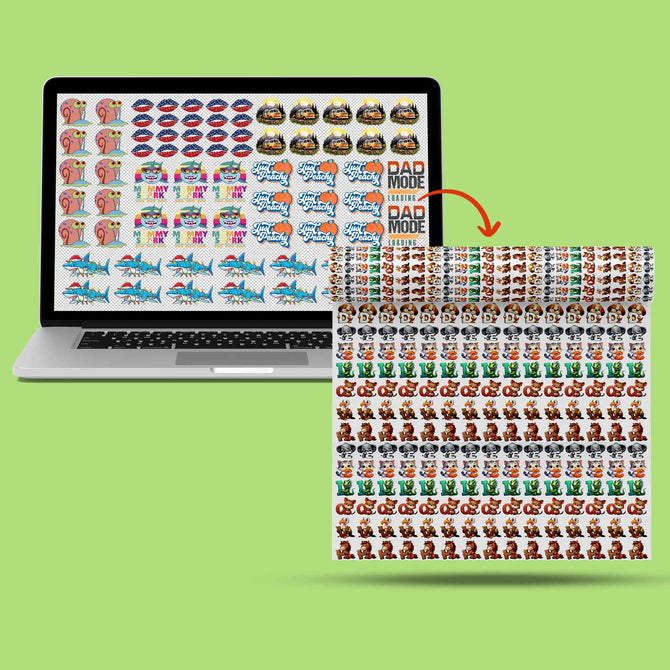
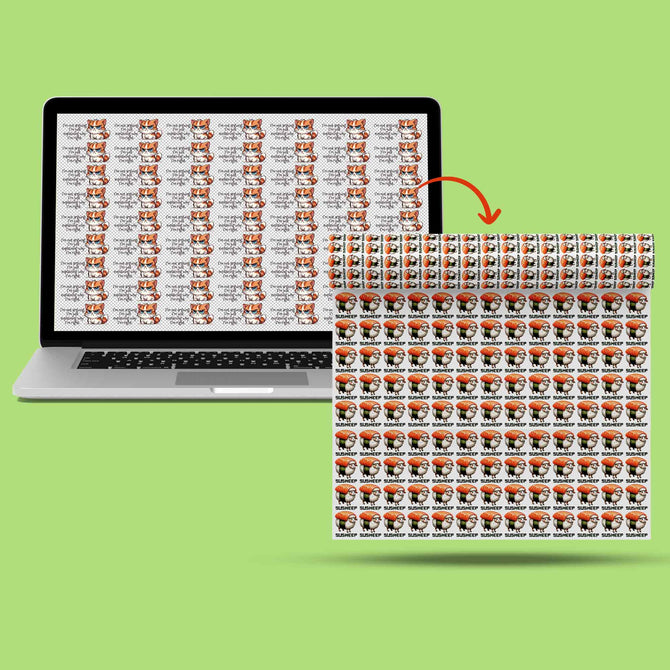
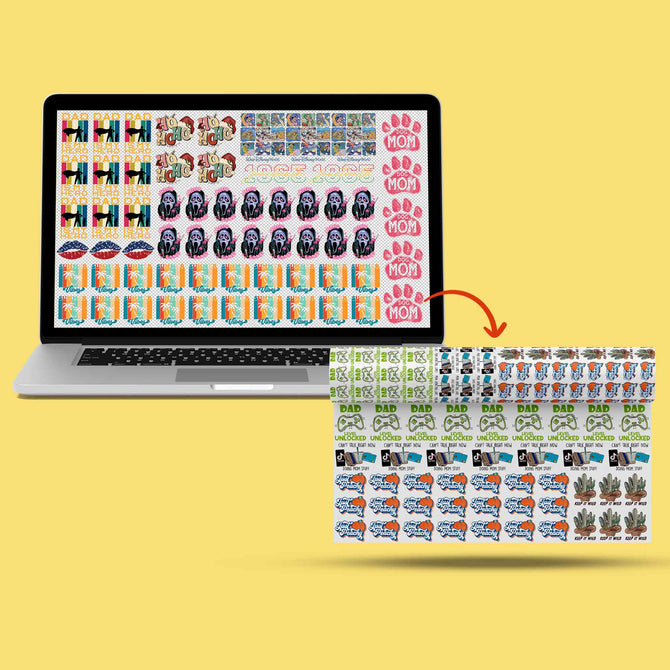
A dtf gang sheet for t-shirts is essentially a high-efficiency layout tool designed for the modern apparel brand. It consists of a single roll or sheet of PET film that houses multiple designs, logos, or variations in one unified print run. Instead of printing one logo at a time, you "gang" them together. This maximizes every square inch of available film. For t-shirt brands, this represents a massive shift in production logic. You aren't just buying prints; you're buying optimized space. It's the most effective way to lower your cost-per-garment without sacrificing the professional quality your customers expect.
The 2026 industry standard relies on high-resolution CMYK+White ink technology. This ensures that even the most complex gradients and fine details look sharp on any fabric color. To understand the foundational technology behind this process, you can explore What is Direct-to-Film (DTF) Printing? via Wikipedia. This digital method has revolutionized how local Richardson shops and national brands handle volume. It removes the expensive setup costs associated with traditional screen printing while providing superior durability.
The Anatomy of a Pro-Grade Transfer
Quality starts with the materials. A professional transfer isn't just ink on plastic; it's a multi-layered chemical bond. Understanding these components helps you troubleshoot your production and ensure longevity.
- PET Film: This is the specialized carrier. It's treated to hold the ink in place with precision until the moment of heat application.
- TPU Powder: This is the adhesive "glue." It's applied to the wet ink and cured. This powder creates the flexible bond that allows your design to stretch with the t-shirt fibers.
- White Ink Backing: This is the secret to vibrancy. By printing a solid white layer behind the CMYK colors, the design stays opaque and bright even on dark garments like black or navy.
Why Gang Sheets are Essential for Scaling
Scaling a brand requires relentless efficiency. If you're still ordering individual "ready to press" cuts for every single order, you're leaving money on the table. A dtf gang sheet for t-shirts allows for superior inventory management. You can print a full run of designs now and only press them when a customer clicks "buy." This "print-on-demand" workflow reduces your upfront risk and keeps your cash flow healthy.
Versatility is another major win for growing businesses. You can fit neck labels, sleeve logos, and large chest prints all on the same 22-inch sheet. This reduces waste significantly. You stop paying for the empty space that usually surrounds a single small logo. In an industry where margins are everything, this layout strategy is the ultimate profit engine. It's about working smarter and getting more value out of every roll of film.
How to Build a Professional DTF Gang Sheet
Building a dtf gang sheet for t-shirts is where your profit margin is truly won or lost. It's a precision task that requires a methodical approach. Start with the right canvas. Most professional production environments utilize a 22-inch width. Set your length based on your specific order volume. This standard width ensures compatibility with high-capacity industrial printers while maximizing the printable area.
Resolution is your next priority. You must set your canvas to 300 DPI. This isn't a suggestion; it's a requirement for professional-grade detail. Anything less results in pixelated edges that look amateur and cheap. Following Professional Apparel Decoration Standards ensures that your digital files translate perfectly to physical garments. It's the difference between a shirt that stays in a customer's closet and one that gets returned.
Spacing is equally critical. Arrange your designs with a 0.5-inch safety margin between every graphic. This buffer zone is vital for fast, error-free cutting once the film arrives at your shop. When you're finished, export the file as a transparent PNG. This ensures no unwanted white boxes appear around your art. Finally, do a "zoom check" at 400%. Look for stray pixels. These tiny, often invisible spots will catch adhesive powder and print as random dots on your t-shirts. If you're ready to get started, you can upload your designs to our system for immediate processing.
Optimizing Your Layout for T-Shirts
Don't waste a single inch of film. Use tessellation to nest oddly shaped designs together like a puzzle. If you have a large back print, tuck small neck labels or sleeve logos into the empty corners. Standardize your sizing before you start. Knowing exactly how many 3-inch chest hits and 10-inch back prints you need allows for a seamless layout process. For more advanced techniques, check out our guide on Mastering DTF Gang Sheets.
Common Artwork Mistakes to Avoid
Low resolution is the most frequent killer of quality. 72 DPI might look fine on a screen, but it will look blurry and unprofessional on a garment. Avoid semi-transparency in your designs. DTF technology requires solid pixels to hold the adhesive powder correctly. If a pixel is too faint, the glue won't stick, and the print will fail. Lastly, never overlap your designs. Even a tiny overlap means you'll ruin two separate prints with a single cut. Keep your layout clean and your margins wide.
Why Gang Sheets Win: Individual Transfers vs. Bulk Sheets
Choosing a dtf gang sheet for t-shirts isn't just a preference; it's a strategic financial move. Individual "ready to press" transfers are convenient, but they carry a heavy markup for labor and packaging. By switching to gang sheets, most brands see a cost reduction of 40% to 60%. You're essentially taking control of the layout and cutting process yourself. For a Plano startup or a high-volume Dallas clothing line, these savings are the fuel for rapid growth. You stop paying for the provider's manual labor and start paying for raw production value.
Consistency is the hallmark of a professional brand. The Direct-to-film (DTF) printing process relies on precise ink density and adhesive powder application. When you gang your designs on a single roll, every logo receives the exact same treatment. There's no variation in color or feel between your chest hits and your sleeve prints. You get a uniform, high-vibrancy result across your entire inventory. It's a faster, more reliable way to ensure your brand looks elite on every single garment.
The ROI of Direct-to-Film for Small Businesses
Profitability comes down to your cost per shirt. High-efficiency gang sheets allow you to receive 50+ designs in one lightweight package. This significantly slashes your shipping costs compared to receiving dozens of individual envelopes. You're consolidating your logistics and your production into one streamlined workflow. If you want a full breakdown of the quality standards that drive this ROI, see our guide on Custom DTF Transfers. It's about making every dollar work harder for your brand.
When to Choose Gang Sheets over Individual Cuts
Speed wins in the apparel industry. You should choose gang sheets for bulk orders, brand launches, and garments that require multiple branding elements. If you're printing a hoodie with a front, back, and sleeve hit, ganging those designs is the only logical choice. It keeps your production organized and your heat press moving. Individual cuts are still useful for one-off custom gifts or emergency replacement prints. However, the smartest brands use a "hybrid" strategy. They keep a steady stock of gang-printed neck labels and sleeve logos while using individual transfers for seasonal or limited-run designs. This ensures they're always ready to press and ship.

Pressing for Success: Applying Gang Sheet Transfers to T-Shirts
Applying a dtf gang sheet for t-shirts is the final, critical step in your production chain. Don't sabotage your hard work by using a home iron. Household irons lack the consistent heat and heavy pressure required to fuse the TPU powder into the garment fibers. A professional heat press is mandatory. It ensures even heat distribution across the entire design area. This is the only way to achieve the durability and vibrancy your customers expect. If you want results that last 50+ washes, you need the stability of professional equipment.
Temperature control is non-negotiable. Set your press between 300°F and 320°F. This specific range is the industry sweet spot for most cotton and polyester blends. Pressure settings are equally vital. You need heavy, even pressure to force the adhesive into the garment's weave. This creates that professional "soft hand" feel. The design should move with the fabric, not resist it. Achieving this level of integration is what separates a premium brand from a cheap knockoff. It's about creating a product that feels as good as it looks.
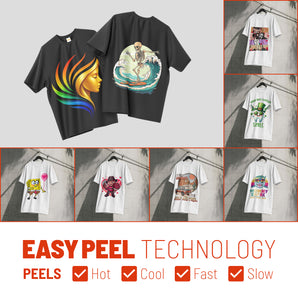
Understand your peeling strategy before you start. Hot peel films allow for high-speed production, as you can remove the carrier sheet immediately after the press opens. Cold peel films require more patience. You must wait until the garment is completely cool to the touch. If you pull a cold peel film while it's still warm, you risk lifting the edges or leaving "ghosting" behind. Clean edges are the hallmark of a job well done. Order your high-speed transfers from our Richardson facility to ensure you're working with the latest 2026 film technology.
Fabric Specific Instructions
100% cotton remains the gold standard for DTF applications. It offers the most porous surface for the adhesive to grab, resulting in maximum durability. However, the versatility of a dtf gang sheet for t-shirts means you aren't limited to just cotton. For polyester and athletic blends, you must be careful. Synthetics can scorch or "glaze" if the heat is too high. Lower your temperature by 10 degrees and use a protective cover. When pressing blank apparel like Shaka Wear or other heavyweight options, the thickness of the material can act as an insulator. You may need to increase your press time by 2-3 seconds to ensure the heat reaches the TPU powder effectively.
The Finishing Press (The Pro Secret)
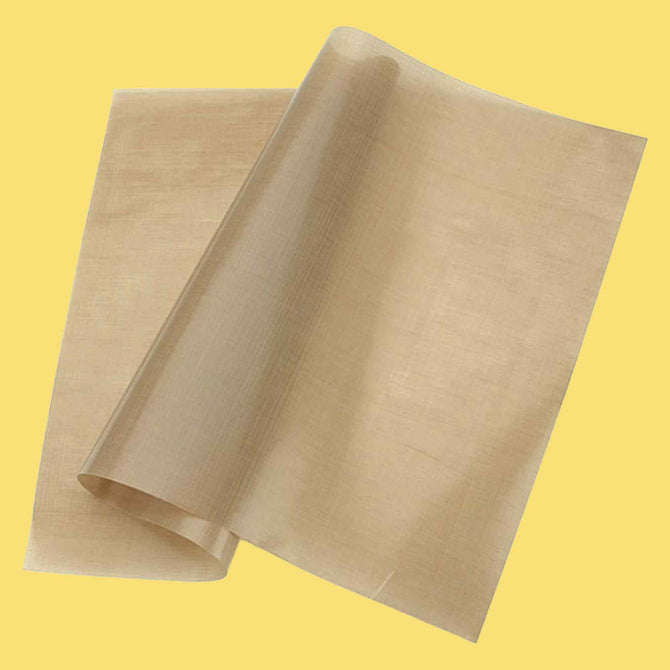
The finishing press is the ultimate pro secret. Once the film is removed, place a Teflon or parchment sheet over the design. Press for a final 5 seconds. This step removes any "plastic" shine and leaves a sophisticated matte finish that customers in Frisco and Irving love. It also ensures the edges are fully sealed against the fibers. If you notice the design lifting during the peel, don't panic. Lay the film back down, increase your pressure setting, and press for another 10 seconds. This usually solves any adhesion issues caused by uneven platens or cold spots in your equipment. Ready to put these tips to work? Order your custom gang sheets today and experience the Richardson standard of quality.
Iris DTF: Your Richardson Partner for High-Volume Gang Sheets
Iris DTF is the engine behind some of the fastest growing apparel brands in North Texas. Based in Richardson, we serve as a local powerhouse for the entire Dallas-Fort Worth metroplex. We don't dilute our focus with embroidery or screen printing. We've spent over 10 years mastering the dtf gang sheet for t-shirts. This specialization means every roll we produce meets elite industrial standards. Our facility is equipped with pro-grade machinery designed for high-volume, professional-grade output. You get the benefit of a seasoned partner that understands the nuances of digital ink and adhesive chemistry.
Our reach extends far beyond Richardson. We provide lightning-fast shipping to brands in Garland, Mesquite, and across the United States. We understand that your deadlines are non-negotiable. Whether you're a local boutique or a national distributor, we provide the same level of precision and speed. Reliability is our baseline. Every sheet undergoes rigorous quality control to ensure your vibrant colors and fine details are preserved. We treat every order as a collaborative partnership, ensuring your brand's reputation is protected with every press.
Serving the DFW Metroplex
Proximity is a competitive advantage. We offer rapid turnaround times for businesses in Plano, Allen, and McKinney. Choosing a local DTF printing Richardson TX partner means you aren't at the mercy of national shipping delays. For entrepreneurs in Aubrey and Wylie, our local pickup options provide a one-step solution to get your product in hand today. It's about keeping your production moving without the wait. We're proud of our local roots and committed to supporting the creative community in our own backyard.
Ready to Scale Your T-Shirt Business?
Scaling shouldn't be complicated. Our professional portal makes it easy to upload your dtf gang sheet for t-shirts and get into production immediately. We're committed to delivering high-vibrancy prints that survive 50+ laundry cycles without cracking or fading. Your creative success is our primary mission. We provide the technical backbone so you can focus on building your brand. Don't settle for inconsistent results from overseas providers or low-end hobbyist setups. Order Your Custom DTF Gang Sheet Today and experience the difference that local expertise and professional equipment make for your bottom line.
Scale Your Apparel Production with Precision
The evidence is clear. A dtf gang sheet for t-shirts is the ultimate tool for cutting production costs while maximizing your creative output. By moving away from expensive individual transfers and mastering the 300 DPI layout process, you're positioning your brand for significant growth. You've learned how to optimize every square inch of film and how to achieve a professional matte finish that lasts. These aren't just technical tips; they're the building blocks of a high-margin business.
Iris DTF is ready to be the engine behind your success. With over 10 years of industry expertise and a high-capacity Richardson, TX based facility, we specialize in delivering professional-grade results. Our transfers are built for the long haul, offering vibrant colors and 50+ wash durability that your customers will notice. It's time to stop overpaying for wasted space and start leveraging the efficiency of bulk production. Your brand deserves the Richardson standard of quality. Build Your Custom T-Shirt Gang Sheet Now and take the first step toward a more profitable future. We're ready to help you win.
Frequently Asked Questions
What is the best file format for a DTF gang sheet?
The best file format for a dtf gang sheet for t-shirts is a high-resolution PNG with a transparent background. You must ensure your artwork is set to at least 300 DPI to maintain professional-grade clarity. Avoid using JPEGs. They lack transparency and will result in unwanted white boxes around your designs. High-quality digital files are the foundation of every vibrant, sharp print we produce in our Richardson facility.
How many t-shirt logos can I fit on a standard 22x24 gang sheet?
You can typically fit 12 to 15 standard 3.5-inch left-chest logos on a 22x24 sheet. If you are printing large 10-inch back designs, you can fit two per sheet with enough leftover space for smaller neck labels or sleeve hits. Always maintain a 0.5-inch safety margin between graphics. This ensures you have enough room to cut the transfers apart without damaging the edges of your artwork.
Do DTF gang sheet transfers work on dark-colored t-shirts?
Yes, DTF transfers work exceptionally well on dark-colored t-shirts. The process utilizes a specialized white ink backing that acts as an opaque primer for the CMYK colors. This prevents the fabric color from "bleeding" through the print. Whether you are pressing on black, navy, or forest green, your designs will remain vibrant and true to your original digital file.
How long do DTF gang sheet prints last on a t-shirt?
Professional DTF prints are designed to last for 50+ washes without cracking, peeling, or fading. This durability is achieved when the TPU adhesive powder is correctly fused into the garment fibers using a heat press. When you follow the industry-standard temperature and pressure settings, the transfer becomes part of the fabric. It stretches and moves with the shirt for long-term wearability.
Can I use a home iron to apply transfers from a gang sheet?
You shouldn't use a home iron to apply these transfers. Home irons cannot provide the consistent 300°F to 320°F heat or the heavy, even pressure required for a permanent chemical bond. Using an iron often leads to designs peeling off after the first wash. A professional heat press is a mandatory investment for anyone serious about building a reliable t-shirt brand with professional-grade quality.
What is the difference between DTF and UV DTF gang sheets?
DTF is specifically engineered for apparel and flexible fabrics. UV DTF gang sheets are designed for hard surfaces like tumblers, laptops, and glass. While standard DTF requires a heat press to activate the adhesive, UV DTF is a "peel-and-stick" technology. It uses a different chemical process that allows for permanent branding on non-porous items without any heat application.
How do I cut the transfers apart once I receive my gang sheet?
Why is my DTF transfer peeling off after the first wash?
Peeling is almost always caused by insufficient pressure or incorrect temperature during the pressing stage. If the TPU powder doesn't reach its melting point, it won't bond with the fabric. It can also happen if you peel a "cold peel" film while it's still warm. Always perform a second 5-second finishing press with a Teflon sheet to lock the design into the fibers and ensure maximum durability.