DTF Printing: The 2026 Guide to Direct-to-Film Transfers

What Is This Article About?
The era of choosing between durability and detail is officially over. If you've spent years fighting with screen printing setup costs or watching vinyl peel after five washes, you know the frustration of subpar results. You want vibrant, full-color designs that actually stay on the fabric. In 2026, dtf printing has moved beyond a DIY trend to become the primary engine for high-growth apparel brands. It's the professional solution for anyone tired of slow turnarounds, limited color palettes, and the technical headaches of traditional methods.
This guide will help you master the technology behind these transfers so you can scale your production with professional precision. From complex multi-color logos to simple chest hits, you'll learn how to leverage gang sheets to maximize your efficiency while maintaining industrial-grade quality. We're covering everything from 300 DPI artwork requirements to the exact curing parameters needed for prints that last 50+ washes. It's time to stop waiting on overseas suppliers and start building a streamlined, local production process that works as hard as you do.
Key Takeaways
- Master the 4-layer transfer system to ensure vibrant colors and total opacity on any fabric type.
- Eliminate cracking and peeling with industrial-grade durability that lasts through 50+ wash cycles.
- Scale your production efficiency and lower per-print costs using high-density gang sheets for dtf printing.
- Secure a competitive edge with local Richardson expertise and same-day turnaround for your apparel brand.
What is DTF Printing? The 2026 Industry Standard
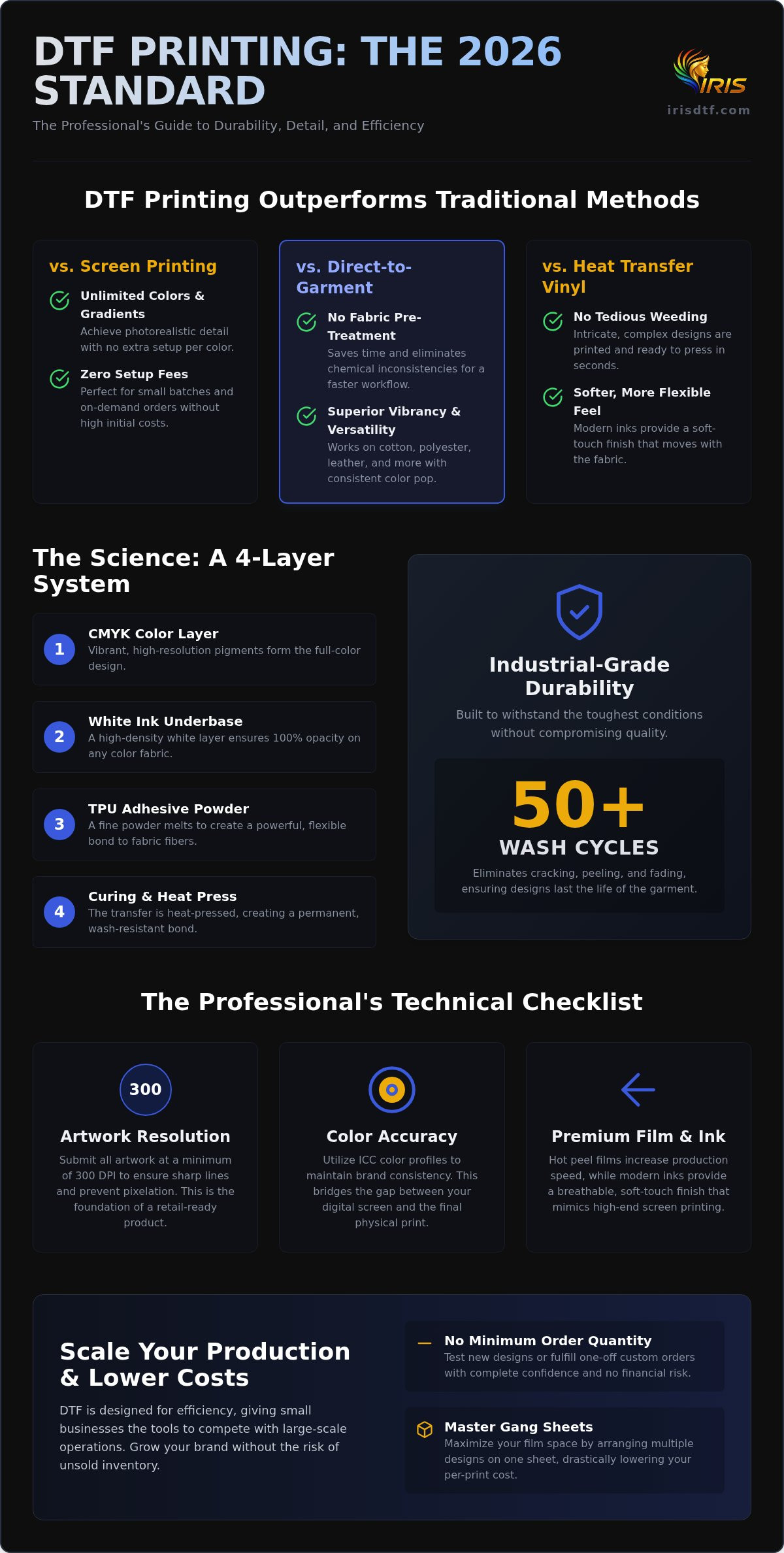
The apparel decoration world has reached a tipping point. For decades, screen printing was the only way to get professional quality, but it came with heavy setup costs and high minimums. Those barriers are gone. Direct-to-film printing is a high-precision digital process where designs are printed onto specialized PET film, coated with TPU adhesive powder, and heat-pressed onto garments. By 2026, dtf printing has set the gold standard for apparel decoration, delivering industrial-grade durability that withstands 50+ wash cycles without losing its vibrant color or flexible feel.
This technology is trending because it bridges the gap between massive commercial runs and high-quality, on-demand production. Unlike sublimation, which is restricted to light-colored polyesters, DTF works on almost anything. You can press onto cotton, polyester blends, and even leather. The 2026 landscape features modern inks with improved stretchability and breathability, ensuring your designs feel like part of the fabric rather than a thick plastic layer on top. It is a streamlined, efficient solution for a fast-paced market.
How DTF Differs from Traditional Methods
Traditional methods often force you to compromise. DTF removes those trade-offs. Here is how it stacks up against the old guard:
- DTF vs. Screen Printing: Forget burning screens or mixing inks. DTF delivers unlimited colors for small batches with zero mess and instant setup.
- DTF vs. DTG (Direct-to-Garment): DTG requires pre-treating every shirt, which is time-consuming and inconsistent. DTF transfers offer superior color pop and are easier to store for future orders.
- DTF vs. HTV (Heat Transfer Vinyl): Complex designs used to mean hours of tedious weeding. With dtf printing, those intricate details are printed and ready to press in seconds.
The Core Benefits for Small Businesses
Efficiency is the key to scaling your brand. DTF gives you the flexibility to grow without the financial risk of carrying unsold inventory. You can offer high-resolution printing with photographic gradients and tiny details that were previously impossible to achieve. There are no setup fees and no minimum order quantities (MOQ), allowing you to test new designs or fulfill custom orders with total confidence. It's the ultimate tool for a "ready-to-work" business model that prioritizes speed, precision, and professional results.
The Science of the Transfer: How DTF Printing Works
The 2026 standard for dtf printing relies on a sophisticated four-layer architecture. It begins with CMYK pigments, followed immediately by a high-density white ink underbase. This white layer is essential for dark fabrics; it prevents the garment color from bleeding through and ensures your design remains vibrant. A specialized PET film carries these layers until they meet the TPU adhesive powder. This system allows for incredible detail without the heavy feel of traditional vinyl.
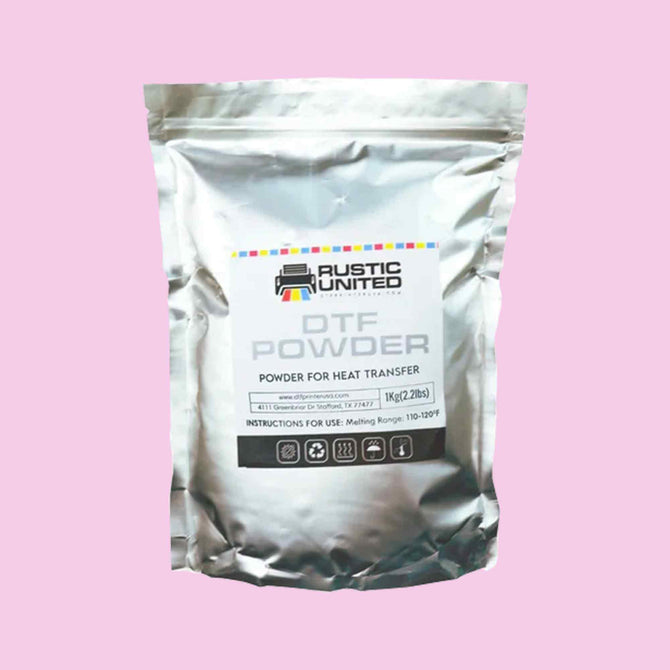
Powder chemistry is where the bond begins. The melting point of the adhesive must be perfectly synchronized with the curing oven temperature. During the heat press stage, the curing process creates a permanent chemical bond with the fabric fibers that anchors the design for the life of the garment. This transformation turns dry powder into a flexible, resilient glue that stretches with the fabric. It is a methodical process that guarantees a professional finish every time.
The Importance of Premium Consumables
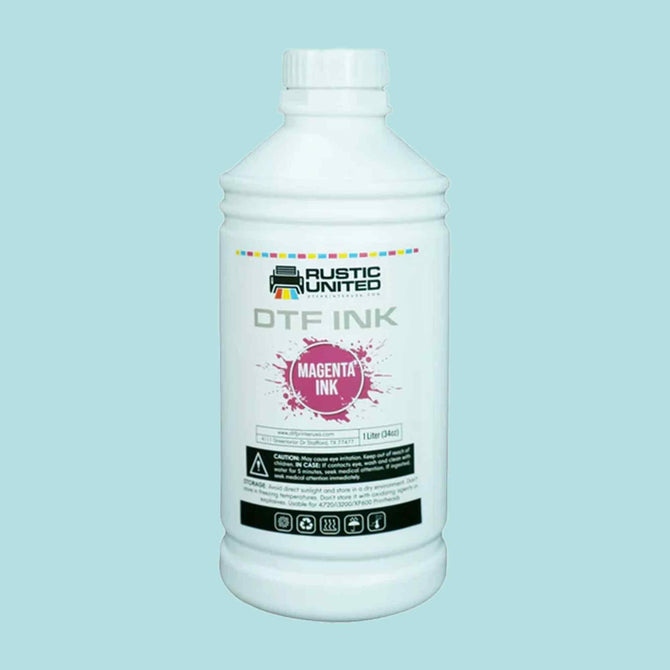
Your results are only as good as your materials. Utilizing premium dtf ink prevents expensive printhead clogs and guarantees color accuracy across every batch. Modern 2026 ink formulations have solved the heavy feel of early transfers, moving toward a soft-touch finish that mimics high-end screen printing. This shift in chemistry ensures that even large designs remain breathable and comfortable for the wearer.
Production speed depends on your film choice. Hot peel films allow you to remove the carrier immediately after pressing, which is a game-changer for high-volume commercial brands. Cold peel films take a few extra seconds but often deliver a superior matte finish. The TPU powder size also dictates the hand feel. Finer powders create a lightweight print, while coarser powders offer the heavy-duty grip required for industrial workwear or thick polyester blends.
Technical Calibration and Color Profiling
Professional clarity requires technical discipline. You must use ICC profiles to bridge the gap between your digital design and the physical print. This ensures your brand colors stay consistent whether you are printing one shirt or one thousand. Without proper profiling, colors can shift, leading to wasted materials and frustrated customers. It is the difference between a hobbyist project and a retail-ready product.
Resolution is your foundation. Never settle for less than 300 DPI artwork. This high-resolution standard ensures that fine lines, small text, and complex gradients remain sharp after the transfer. If you want to skip the technical setup and get straight to the results, you can trust a professional transfer partner to handle the heavy lifting for you. Precision at this stage prevents pixelation and ensures your brand looks its best on any garment.
Durability and Washability: Will It Last?
The most common question from apparel brand owners is simple: will the print survive the laundry? In 2026, the answer is a definitive yes. Professional dtf printing now delivers a 50+ wash cycle guarantee. This isn't just a marketing claim; it's a quality benchmark that holds up even under industrial laundry conditions. Unlike early-generation transfers that often cracked after a few cycles, modern TPU adhesives offer exceptional stretch and recovery. This flexibility makes dtf printing the ideal choice for activewear and spandex blends that undergo constant movement and tension.
Environmental resistance is another major factor for brands operating in harsh climates. These transfers are engineered for high UV stability and colorfastness. Even under the intense Texas sun, the pigments remain vibrant without the fading typically seen in lower-quality digital prints. If you experience peeling, it is rarely a failure of the technology itself. Instead, it usually stems from improper pressure or trapped moisture in the garment during the application process. Pre-pressing your fabric for 5 seconds is a mandatory step to remove humidity and ensure a permanent bond.
Optimal Pressing Instructions for Longevity
Precision during application is the difference between a retail-ready garment and a return. The "Golden Rule" for 2026 transfers is a balance of time, temperature, and pressure. Set your heat press to 300-320°F and apply medium to firm pressure for 12-15 seconds. This specific window allows the adhesive to melt into the fibers without scorching the fabric.
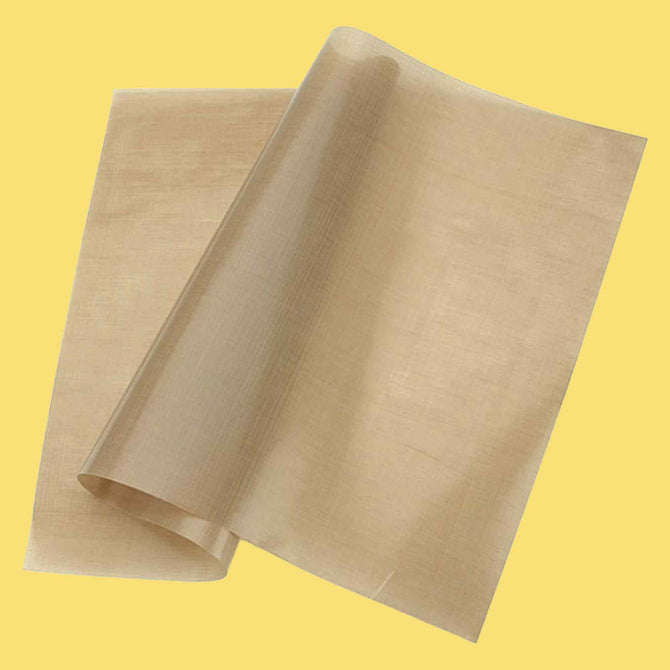
The finishing press is non-negotiable for professional results. After peeling the film, you must perform a second press for 5-10 seconds using a Teflon sheet or parchment paper. This flattens the ink and locks the adhesive deep into the textile grain. For a complete breakdown of this process, check our guide on how to apply DTF transfers to ensure your brand maintains its reputation for quality.
Fabric Compatibility and Testing
While DTF is famous for its versatility, different materials require different approaches. 100% cotton remains the easiest substrate for adhesion, but high-quality tri-blends are equally reliable when handled correctly. The quality of your blank apparel directly dictates the final appearance of the transfer. Lower-grade shirts with high stray fiber counts can cause pilling that interferes with the smooth finish of the print.
Watch out for dye migration when working with sublimated polyester. This occurs when the garment's dye turns into a gas under heat and bleeds into the white ink of your transfer. To prevent this, keep your temperature at the lower end of the recommended range. Using a reliable local partner ensures you get the technical support needed to navigate these fabric-specific challenges with ease.
Mastering the Gang Sheet Strategy
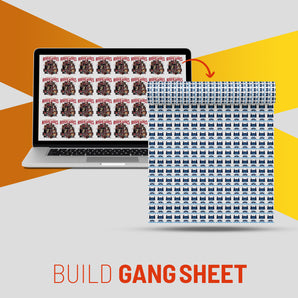
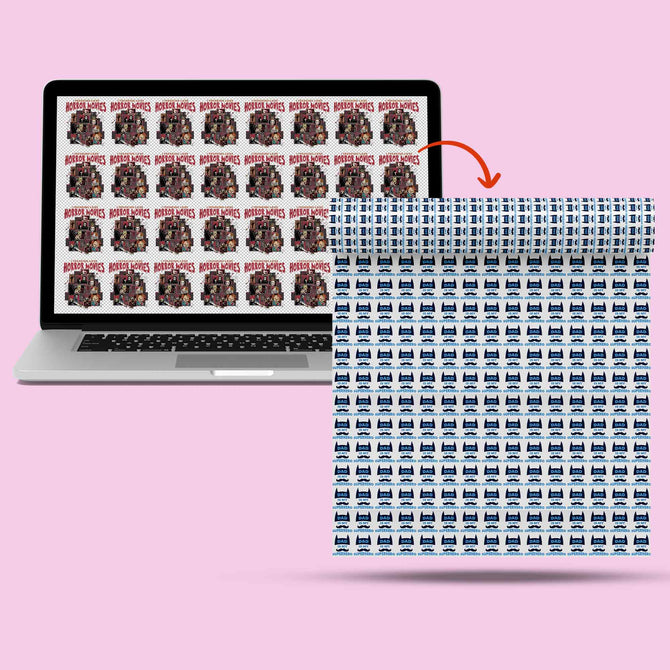
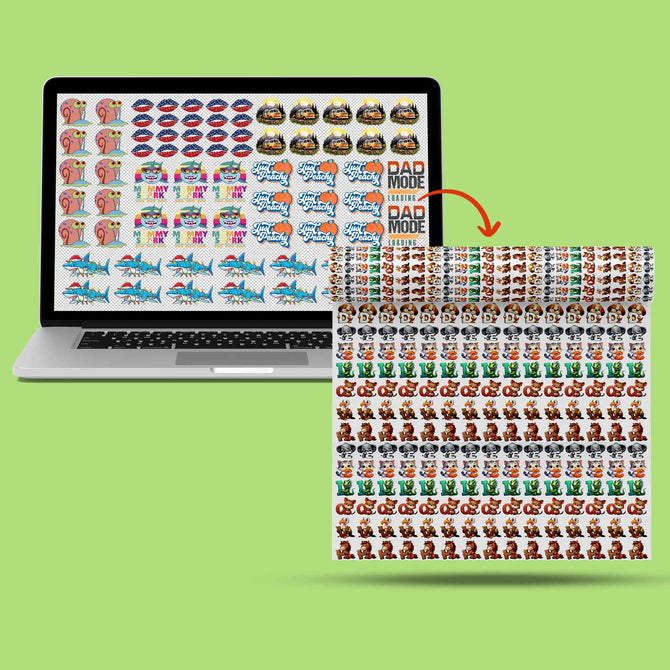
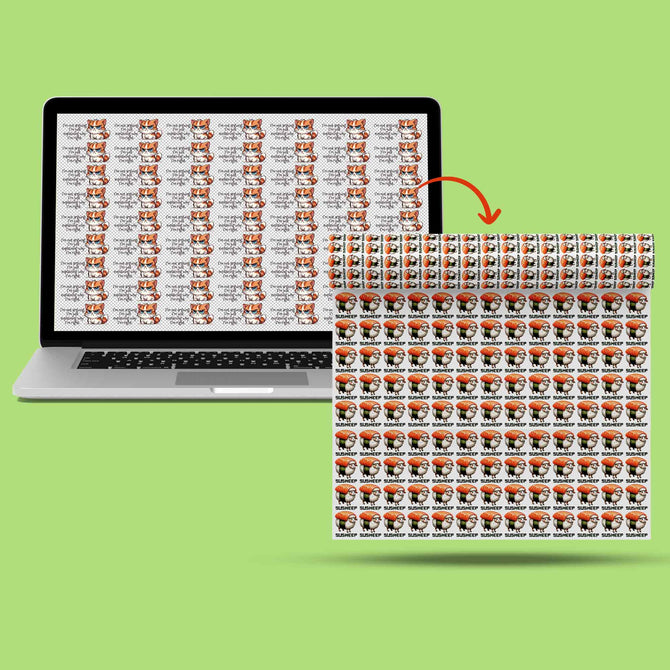
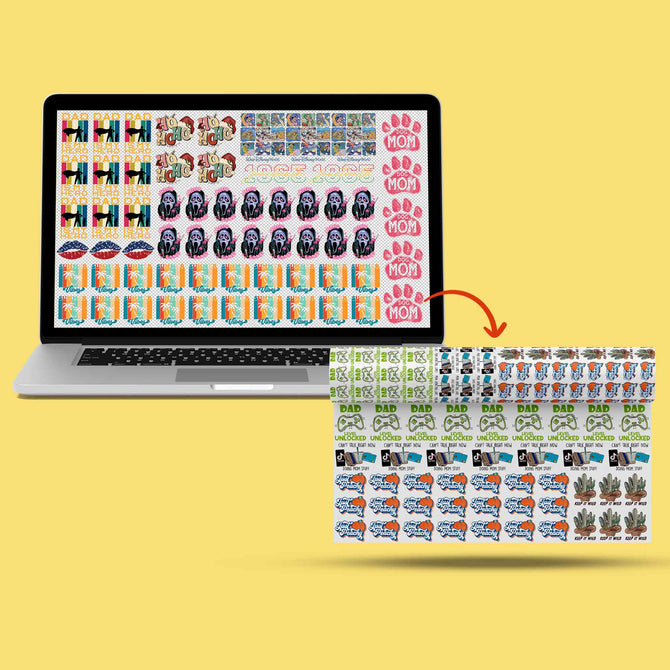
Efficiency is the engine of a profitable apparel brand. A gang sheet is your primary tool for hitting that goal. By nesting multiple designs onto a single roll of PET film, you maximize every square inch of your material. This strategy is the secret behind reducing your per-print cost to under $1.50 for standard chest logos. It isn't just about saving money; it's about optimizing your entire production workflow. You can print neck tags, sleeve branding, and main chest pieces all on one continuous roll, ready for the heat press. Mastering DTF gang sheets ensures you get the highest possible value out of every order.
The math is simple: more designs per foot equals higher margins. Instead of ordering individual transfers, you control the layout and the density. This approach is essential for high-volume dtf printing where speed and cost-per-unit dictate your success. It allows you to handle complex multi-item orders without the logistical nightmare of tracking separate pieces. You get a single, organized roll that simplifies your inventory and your application process.
How to Build a High-Value Gang Sheet
Success starts with the right dimensions. Most industrial printers use a standard width of 22 inches, with lengths typically ranging from 60 to 120 inches. You can use professional software like Adobe Photoshop or Illustrator to create your canvas, but many modern online builders now offer drag-and-drop functionality. Always maintain a safety margin of at least 0.25 inches between designs. This gap is vital for easy cutting and prevents you from accidentally damaging one print while separating another. Precision at the design stage prevents waste at the production stage.
Design Tips for DTF Success
Your artwork must be technically sound to ensure a perfect transfer. Avoid "glow" effects or semi-transparent pixels at the edges of your graphics. These "soft" pixels don't take the adhesive powder well, which leads to a grainy, unfinished look after pressing. Always use a transparent background and export your files in a high-resolution PNG format. If you're ready to scale, upload your custom gang sheet to our professional portal for immediate production.
Follow this step-by-step guide to minimize waste and maximize your profit:
- Start with the anchors: Place your largest back pieces or main graphics first to establish the layout.
- Fill the "dead space": Identify the empty gaps between large designs and drop in your smaller chest logos.
- Tuck the tags: Use the corners and thin margins for neck tags or small branding elements.
- Vertical gaps: Use the long edges of the film for sleeve prints or vertical text logos.
This methodical arrangement ensures you aren't paying for empty film. It turns every square inch into a sellable product.
Local Speed and Professional Quality in Richardson, TX
Timing is the ultimate competitive advantage in the apparel industry. When you're waiting on a shipment from a distant supplier, your production stops and your growth stalls. Iris DTF changes that dynamic. With 10+ years of local expertise in the Dallas-Fort Worth metroplex, we provide the momentum your brand needs to stay ahead. We aren't just a vendor; we're a high-capacity powerhouse designed to support both hobbyists and high-volume clothing brands with speed and precision. Choosing a local partner for dtf printing means you get industrial-grade quality without the logistical delays that plague overseas orders.
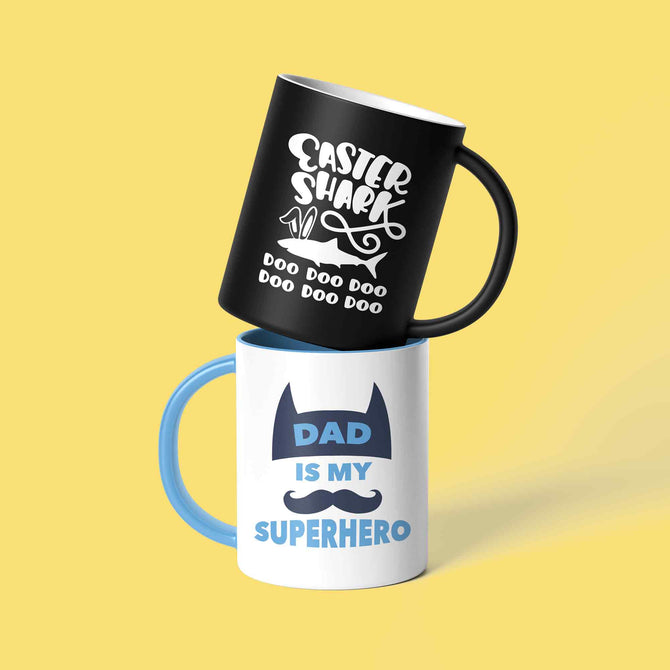
Why settle for days of transit time? Local businesses in Allen, Plano, and Dallas benefit from same-day pickup options that keep orders moving at a professional pace. This reliability allows you to scale your brand with total confidence. You can react to market trends instantly and fulfill custom orders without the stress of shipping windows. Beyond traditional textiles, we also help you expand your product line with UV DTF transfers for hard surfaces. This allows you to brand tumblers, laptops, and promotional gear with the same durability and color pop you expect from our apparel transfers.
Serving the Dallas-Fort Worth Metroplex
Brand owners in Frisco, McKinney, and Garland need solutions that respect their time and their bottom line. By choosing DTF printing in Richardson, you eliminate expensive shipping fees and reduce your brand's carbon footprint. There's also a distinct advantage to working with a local pioneer. You can access 'touch and feel' samples to verify the soft-hand finish and color accuracy before committing to a massive commercial run. This level of personalized service builds trust and ensures your final product meets your exact standards every time.
Ready-to-Press Solutions for Every Brand
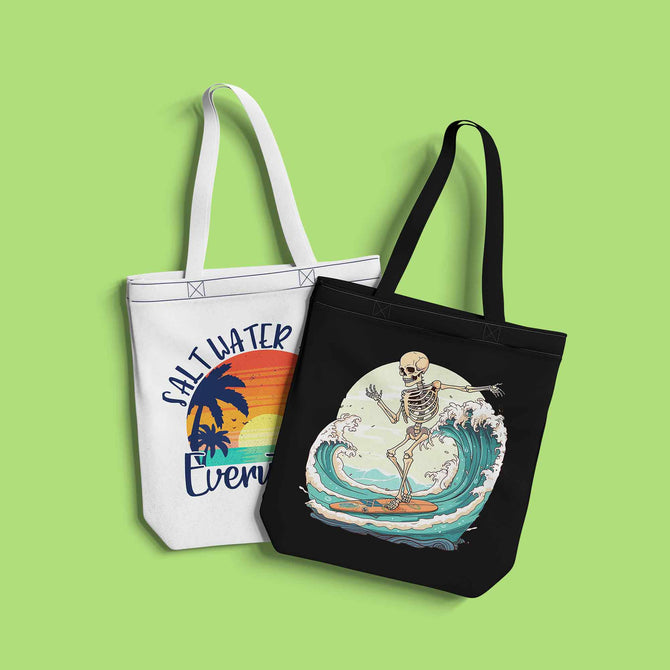
We provide a complete ecosystem for your creative success. Whether you need custom t-shirts or high-quality blank apparel, our inventory is ready to work for you. We also support businesses that run their own equipment by providing wholesale DTF supplies, ensuring you always have access to the same professional-grade materials we use in-house. Our commitment is to remain the essential engine behind your brand's commercial success. Stop struggling with inconsistent quality and slow turnarounds. Order your custom DTF transfers from Iris DTF today and experience the difference that local expertise makes.
Take Command of Your Apparel Production
The transition to the 2026 standard of dtf printing is more than a trend; it's a strategic move for your brand's survival. By mastering the gang sheet strategy and utilizing the 4-layer transfer system, you eliminate the high costs and slow turnarounds that once limited your growth. You now have the power to deliver vibrant, high-resolution designs that withstand 50+ washes without breaking your budget. Precision and efficiency are no longer optional; they are the essential engines of your commercial success.
Stop waiting on distant suppliers and start leveraging a local powerhouse. With 10+ years of DFW expertise, Iris DTF is your Richardson-based partner for fast local pickup and professional reliability. We offer no minimum orders on custom gang sheets, allowing you to scale at your own pace without financial risk. Ready to see the difference for yourself? Scale your brand with premium DTF transfers from Iris DTF today. Your creative vision deserves a reliable partner that moves as fast as you do. Let's get to work.
Frequently Asked Questions
Is DTF printing better than screen printing?
It depends on your order volume and design complexity. DTF is the superior choice for full-color, intricate graphics and small-to-medium batches because it requires zero setup fees. While screen printing is cost-effective for massive runs of simple colors, it can't match the "no minimum" flexibility of digital transfers. DTF delivers industrial-grade durability without the technical headaches or high entry costs of traditional methods.
What temperature do I press DTF transfers at?
The standard range for professional transfers is 300°F to 320°F. You should apply medium to firm pressure for 12 to 15 seconds. If you're working with heat-sensitive synthetic fabrics, you may need to drop the temperature to 280°F and increase the dwell time slightly. Always perform a test press on a scrap piece of fabric to ensure the adhesive bond is perfect before starting production.
Can you use a home iron for DTF transfers?
No, a home iron cannot provide the consistent heat or heavy pressure required for a permanent bond. DTF technology requires a professional heat press to ensure the TPU adhesive melts evenly into the fabric fibers. Using an iron often leads to cold spots and uneven application. This failure causes the print to peel or crack after just one wash. Invest in a reliable heat press for retail-ready results.
What is the difference between DTF and UV DTF?
DTF is for textiles, while UV DTF is for hard surfaces. Standard dtf printing uses a heat press to bond ink to fabric fibers. UV DTF transfers use a specialized UV-cured adhesive that allows you to "rub on" designs to glass, metal, or plastic without any heat. Use standard transfers for t-shirts and hoodies; use UV stickers for tumblers, laptops, and equipment branding. They are different tools for different jobs.
How long does a DTF transfer last on a t-shirt?
A high-quality transfer will last for 50+ wash cycles without significant fading or cracking. This longevity matches or exceeds professional screen printing standards. To maximize the garment's lifespan, we recommend washing inside out in cold water and tumble drying on low heat. Proper application with a mandatory finishing press is the most critical factor in ensuring your designs stay vibrant and flexible for years to come.
Does DTF printing work on black 100% cotton shirts?
Yes, it is the premier solution for dark cotton garments. The dtf printing process uses a high-density white ink underbase that provides total opacity. This ensures your colors remain vibrant and "pop" against the black fabric without any color bleeding. Unlike other digital methods, it doesn't require messy liquid pre-treatment. This makes it a faster, cleaner, and more reliable option for dark-colored apparel brands.
Why is my DTF transfer peeling after the first wash?
Peeling is usually caused by trapped moisture in the fabric or insufficient pressure during the press. Always pre-press your garment for 5 seconds to remove humidity before applying the transfer. Ensure your heat press is calibrated correctly and that you're using enough force to drive the adhesive into the textile grain. A secondary finishing press after peeling the film is also mandatory to lock the design in place.
Where can I get DTF transfers printed near me in Dallas?
Iris DTF is the Richardson-based powerhouse serving the entire DFW metroplex. We offer same-day or next-day pickup for businesses in Allen, Plano, and Dallas. With 10+ years of expertise, we provide commercial-grade quality with no minimum order requirements. You can skip the shipping delays and pick up your custom gang sheets directly from our local facility to keep your production schedule on track and your customers happy.