
DTF Powder Buying Guide: Choosing the Right Adhesive for Pro-Quality Transfers

What Is This Article About?
Your digital design is only as good as the adhesive holding it to the fabric. If you're tired of prints that feel like sandpaper or peel after three washes, the culprit isn't your printer; it's your dtf powder. You want that retail-ready, soft-touch finish that customers crave. It's frustrating when fine lines don't stick or your essential supplies take weeks to arrive from overseas. We understand the pressure to deliver perfection on every single order.
Choosing the right adhesive is the difference between a "crunchy" transfer and a professional garment that lasts. This guide shows you how to select the perfect grain to ensure your apparel is durable, stretchable, and ready for the retail floor. You'll discover how to achieve consistent results across 50+ wash cycles while avoiding common application pitfalls. We'll break down grain sizes, curing requirements, and how sourcing locally in Richardson keeps your production line moving with speed and precision. Get ready to transform your workflow and deliver the quality your brand deserves.
Key Takeaways
- Learn why the right TPU adhesive acts as the structural foundation for every durable, stretchable transfer you produce.
- Identify when to use white or black dtf powder to prevent color bleed and ensure maximum opacity on dark fabrics.
- Discover how to pair your supplies with high-quality inks and hydraulic pressure for consistent, retail-ready results.
- Master the curing process to distinguish between perfectly melted adhesive and ruined, burnt transfers.
- Understand the benefits of sourcing tested, professional-grade supplies from a local expert with a decade of hands-on experience.
What is DTF Powder and Why Does Quality Matter?
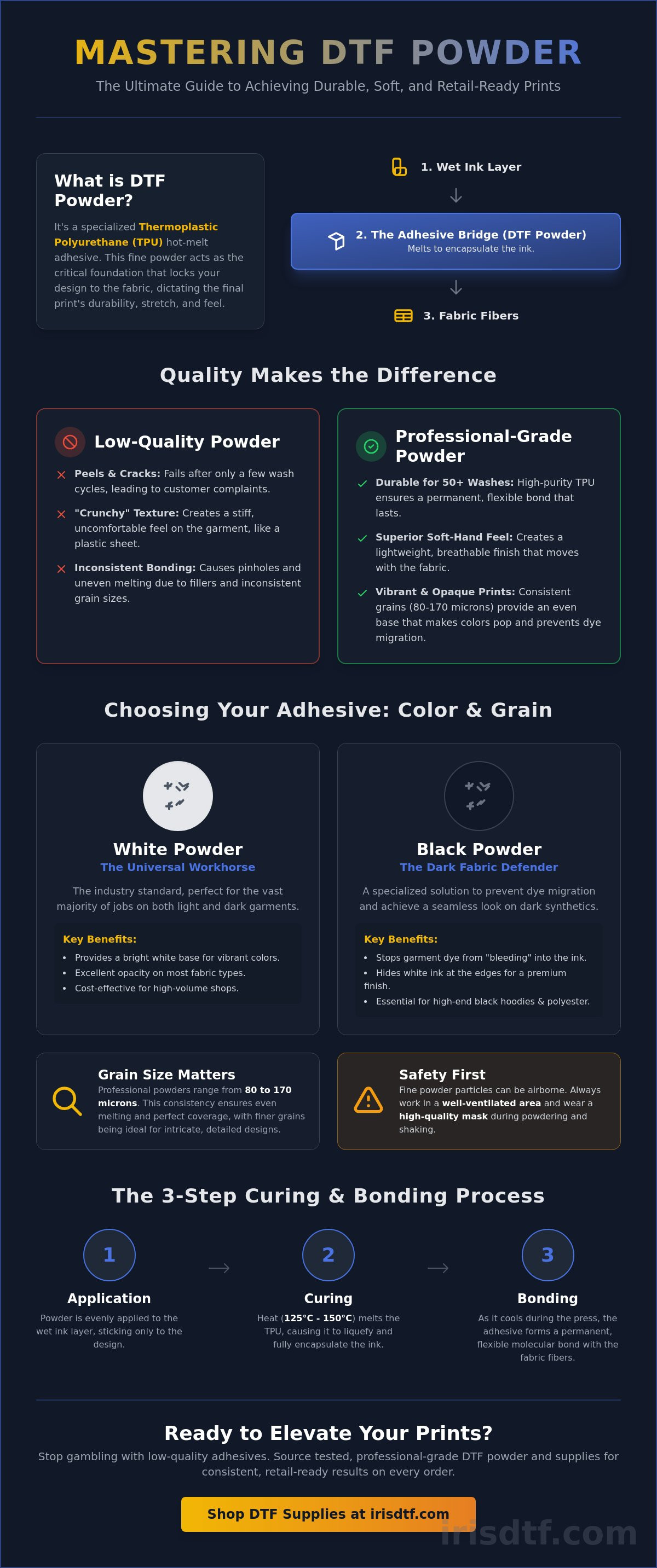
Your print is only as strong as its foundation. In the Direct-to-film (DTF) printing process, that foundation is the adhesive. DTF powder is a specialized hot-melt adhesive crafted from Thermoplastic Polyurethane (TPU). It's the critical bridge that locks digital ink into fabric fibers. Without it, your design is just a layer of wet ink on a piece of plastic film. Quality matters because the powder dictates the stretch, durability, and texture of the finished shirt.
Low-quality adhesives are a common headache for growing print shops. They often cause specific failures that ruin your reputation with clients:
- Pinholes: Tiny gaps where the ink fails to bond to the fabric, leaving visible spots.
- Adhesion Failure: Prints that peel, crack, or flake off after a single wash cycle.
- Uneven Texture: A "crunchy" or stiff feel that makes the garment uncomfortable to wear.
These issues are especially prevalent on tricky polyester blends. We focus on high-purity TPU at Iris DTF. We want your transfers to have a superior "soft-hand" feel that rivals high-end screen printing. By using a refined dtf powder, you ensure that every shirt leaving your shop is retail-ready.
The Chemistry of the Bond
TPU is a versatile polymer. It remains solid at room temperature but melts into a viscous liquid when exposed to specific heat ranges, usually between 125°C and 150°C. During the curing stage, the dtf powder liquefies and encapsulates the ink layer. As it cools, it creates a permanent, flexible bond. This isn't just about sticking things together; it's about molecular integration. TPU acts as a flexible, high-strength barrier that protects the integrity of the design through repeated wear and washing.
The gap between industrial-grade and hobbyist-grade adhesives is massive. Industrial powders feature consistent grain sizes, typically ranging from 80 to 170 microns. This consistency ensures even melting across the entire design. Hobbyist versions often contain fillers or inconsistent grains that lead to brittle transfers. You need a powder that behaves predictably every time you hit the press.
Impact on Garment Feel
Nobody wants a shirt that feels like a plastic sheet taped to their chest. The quality of your powder directly impacts breathability. High-purity adhesives allow for a thinner application while maintaining a death-grip on the fabric. This creates a lightweight finish that moves with the wearer rather than resisting them.
Quality also affects visual output. Premium powder provides a clean, white base that helps colors pop, especially on dark garments. It effectively blocks dye migration. This is a common issue where the polyester's color "bleeds" through the white ink, turning a crisp white design into a muddy grey. Using a premium adhesive prevents this chemical reaction, keeping your whites bright and your blacks deep. It's the secret to a product that looks as good after the fiftieth wash as it did on the first day.
Choosing Your Adhesive: Grain Size and Color Options
Selecting the right dtf powder isn't a one-size-fits-all decision. It's a strategic choice that affects both color accuracy and garment longevity. You need to match the adhesive to your specific fabric type and design complexity to get professional results. Most shops break their inventory down by grain size and color to handle a diverse range of client requests.
Safety is the first priority when handling these materials. Fine grains are excellent for intricate details, but they are easily airborne. Inhaling these particles can lead to health problems from fine particle exposure. Always prioritize a well-ventilated workspace and use a high-quality mask during the powdering and shaking process. Protecting your health is just as important as protecting your print quality.
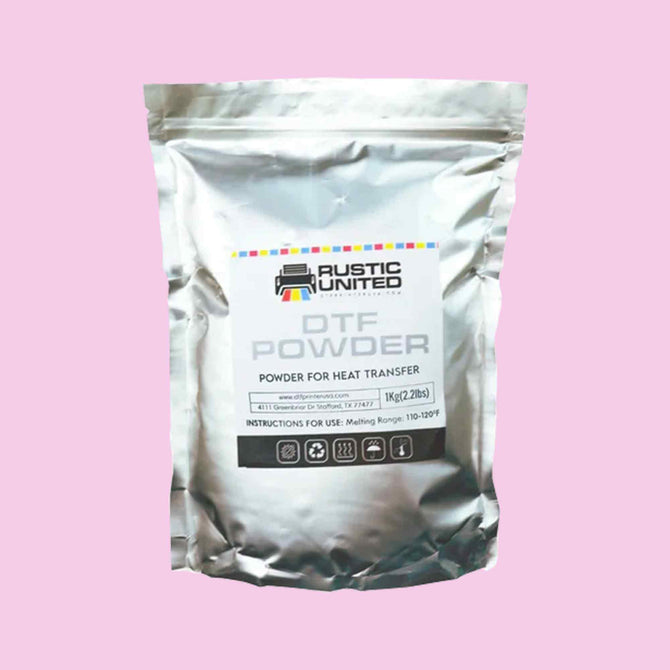
White powder is the universal workhorse of the industry. It handles almost every light or dark garment in your catalog with ease. Black powder is your specialized defense against "sublimation" or color bleed on dark synthetic fabrics. It creates a dark barrier that stops the garment's dye from migrating into your white ink layer. For shops that want a versatile, high-performance option, our DTF Transfer Medium Powder - 1 KG delivers the perfect balance of softness and bonding strength.
When to Use Black vs. White Powder
Black powder is essential for high-end black hoodies. It effectively hides the white ink base layer at the very edges of your design, creating a seamless, retail-quality look. Conversely, white powder is the safer choice for neon or bright-colored designs. Black adhesive can occasionally "ghost" through very light colors, dulling the vibrancy of the print. Keep your supplies organized and use dedicated scoops for each color. This prevents cross-contamination that can cause unwanted spotting on your finished shirts.
The 'Medium Grain' Advantage
Medium grain is the industry secret for Richardson-based custom brands. It provides enough surface area for a rock-solid bond while remaining fine enough to capture detailed logos. It's incredibly versatile. This grain size works flawlessly in both high-speed automated powder machines and manual shaking setups. It also excels in the "stretch test" on performance wear. When applied to spandex, medium grain adhesive flexes with the fabric instead of cracking. If you're looking to upgrade your production quality, consider browsing our full range of DTF supplies to find your perfect match.
Building the Perfect DTF System: Beyond the Powder
Great transfers aren't an accident. They're a result of total system synergy. While your dtf powder provides the structural bond, it relies on your ink and hardware to perform at its peak. You can't pair premium adhesive with low-grade ink and expect retail-quality results. Every component must work in harmony to ensure your designs stay vibrant and attached through dozens of wash cycles. Precision in your setup is the difference between a one-time customer and a lifelong brand partner.
Opacity is the primary goal for professional apparel. Pairing your adhesive with DTF White Ink - 1 Liter ensures a thick, vibrant base that doesn't let the fabric color show through. This ink is formulated to bond perfectly with Thermoplastic polyurethane, creating a unified layer that resists cracking and peeling. For high-volume shops looking to scale, manual application often becomes a bottleneck. Investing in the dtf printer usa dpu24 4 bundle with dryer streamlines your entire workflow, moving you from printing to curing with zero downtime.
Ink and Film Compatibility
The surface of your film dictates how well the powder adheres. Our Double Matte Cold Peel film is engineered specifically to work with TPU medium powder. It provides a stable release while holding the ink in place during the critical powdering stage. Mismatched brands often lead to a phenomenon known as "oiling." This happens when the ink and film don't bond correctly, causing moisture to bead on the surface of the transfer. It ruins prints and wastes expensive materials. Maintain your color accuracy by using consistent DTF Cyan, Magenta, and Yellow 1-liter options for every job.
Hardware Maintenance for Better Transfers
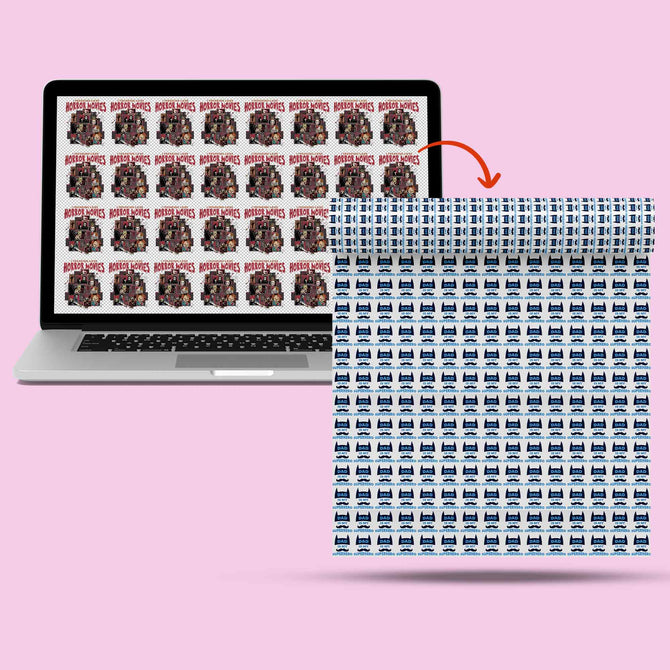
System failure is expensive. Small parts keep your production line moving and your quality consistent. A Replacement 3W Ink Pump is vital for maintaining steady ink flow to the print head. If the flow stutters, your dtf powder won't have enough wet ink to grab onto, leading to weak spots in the transfer. Precision matters in film feeding too. The Replacement DTF Small Wheel Motor ensures the film moves at a steady pace, preventing overlapping or skipped lines that can ruin a gang sheet.
Protecting your hardware is a daily requirement. The Replacement Horizontal Ink Stack Captop keeps your print head from drying out and clogging during idle periods. Finally, don't overlook your power stability. A Replacement 24V10A Power Supply ensures your machine has the steady voltage needed for long, demanding production runs. Reliability is built one part at a time. When your hardware is healthy, your transfers will be too.
Curing and Pressing: How to Avoid Common Failures
Curing is the moment of truth. This is when your dtf powder transitions from a gritty coating into a smooth, resilient adhesive layer. Precision is everything here. If the temperature is too low, the bond won't hold. If it's too high, you risk burning the adhesive and ruining the stretch. For most TPU formulations, 320°F is the sweet spot. It provides enough heat to liquefy the powder without scorching the garment or the film. Get this right, and your prints will stay locked to the fabric through dozens of heavy wash cycles.
Visual cues are your best friend during this stage. You are looking for a consistent, "orange peel" texture across the entire design. If the powder looks like sand, it hasn't melted. If it looks flat and glassy, you've likely overcooked it. Achieving this balance consistently is what separates hobbyist results from retail-quality apparel. Using a dedicated curing oven is the most reliable method, but hovering your heat press works if you maintain a consistent gap and temperature throughout the process.
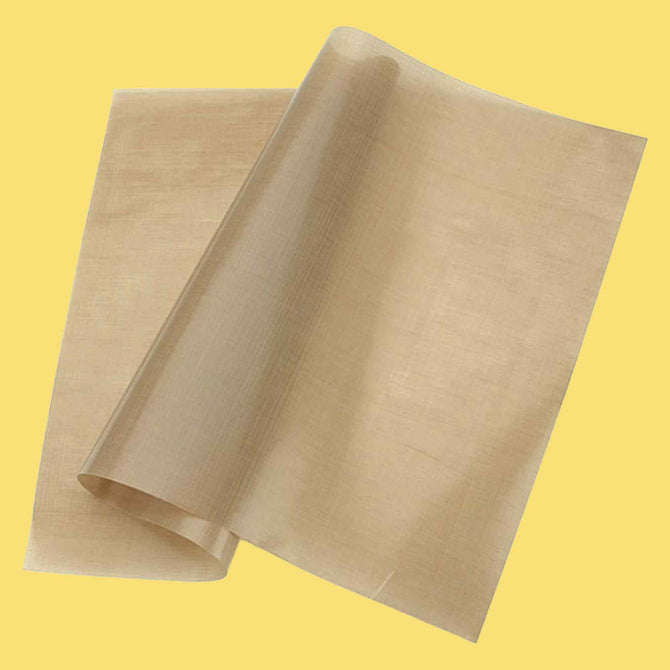
Moisture is a hidden enemy for Richardson-based shops. North Texas humidity can settle into your blank apparel, leading to steam bubbles during the press. This results in uneven bonding and premature peeling. Always pre-press your garments for 5-10 seconds before applying the transfer. This simple step removes trapped moisture and flattens the fibers, ensuring the dtf powder can bite directly into the fabric. Once the main press is done, don't forget the finishing sheet. A second 5-second press with a Teflon or parchment sheet locks the design into the fibers and sets the final sheen.
Even bonding requires more than just heat. It requires uniform, heavy pressure. Manual presses often have cold spots or uneven weight distribution, which leads to edge lifting on fine lines. The HDB2022 Hydraulic Base Moving Heat Press solves this by using hydraulic force to apply consistent pressure across the entire platen. This is essential for large designs where a single weak point can ruin the whole garment. Consistency builds trust with your clients.
Professional Pressing Equipment
Scale your production with the right tools. For shops handling massive gang sheets, the HDH2022 Hydraulic Head Moving Press provides the reach and stability needed for oversized prints. If your volume is high, consider an air-operated system like the ADB2022. These machines reduce operator fatigue and ensure that every single press is identical. Precise timing prevents adhesive scorching on delicate synthetics. Secure your production quality today by browsing our professional DTF equipment and supplies.
Why Dallas and Richardson Brands Trust Iris DTF for Supplies
We aren't just a supplier; we're your neighbors. Iris DTF is a Richardson-based pioneer with over 10 years of hands-on experience in the custom apparel industry. We've seen the technology evolve from its infancy to the high-speed powerhouse it is today. This history gives us a unique perspective on what local shops actually need to succeed. We don't just ship boxes from a warehouse across the country. We run a local facility where every dtf powder and ink batch is tested for real-world performance before it ever reaches your shop. Tested. Proven. Ready to work.
The local DFW advantage is a game-changer for your production timeline. Brands in Plano, Frisco, and Dallas rely on us for faster shipping and expert technical support that national competitors simply can't match. When a machine goes down or you run out of adhesive mid-job, you don't have time to wait for a shipment from overseas. We understand the momentum of your business. Our proximity ensures you get the parts and supplies you need with speed and precision. We support your growth at every stage, providing everything from replacement data cables to full-scale printer bundles.
The Iris DTF Quality Guarantee
Every product in our catalog undergoes rigorous testing for wash-fastness and color accuracy. We've refined our selection to ensure maximum compatibility across different fabric types and printing environments. This local expertise is a lifeline for DFW-area small businesses. We provide the technical clarity you need to keep your production moving without hesitation. Our supplies offer seamless integration with our custom gang sheet and UV DTF sticker services, giving you a unified workflow for all your branding needs. Reliability is our standard.
Get Started with Professional Supplies Today
Join the hundreds of North Texas brands scaling their operations with Iris DTF supplies. Whether you are troubleshooting a specific adhesion issue or building a new production line from scratch, we have the tools and the dtf powder you need to deliver retail-quality results. Don't settle for "good enough" when you can have professional-grade consistency. Direct support. No fluff. Just results.
Ready to upgrade your production? Shop the Full DTF Supplies & Equipment Collection. You can also visit our Richardson facility for expert advice on your next production run. Let's build your creative success together.
Upgrade Your Production with Expert-Tested Supplies
Your brand's reputation rests on the durability and feel of every garment you ship. Choosing the right dtf powder is the critical first step toward achieving the soft, stretchable, and retail-ready finish your customers expect. By matching your adhesive grain to your specific design needs and maintaining a precise curing process, you eliminate the technical failures that stall your growth. Consistency isn't just a goal; it's a requirement for commercial success.
We've spent over 10 years mastering the DFW printing market from our local facility. Iris DTF provides the Richardson-based local support you need to keep your production line moving with speed and precision. Every adhesive, ink, and hardware component we sell is tested in-house to guarantee retail-quality durability and superior wash-fastness. Stop settling for "good enough" and start using the supplies that professional North Texas brands trust every day.
Ready to scale your business with professional-grade gear? Shop Professional DTF Supplies & Equipment today. We're ready to help you turn your creative vision into a high-performance commercial reality. Let's get to work.
Frequently Asked Questions
What is the difference between white and black DTF powder?
White powder is the universal choice for most designs, while black powder is specifically engineered to block dye migration on dark synthetic fabrics. Black adhesive prevents the garment's color from bleeding into your white ink layer, ensuring your design stays crisp and bright. White powder is preferred for light-colored garments to avoid any dark adhesive ghosting through the print or dulling the vibrancy of neon colors.
How do I store my DTF powder to prevent clumping in the Texas humidity?
Store your supplies in airtight containers with silica desiccant packs to combat high humidity levels in the DFW area. Moisture causes clumping and uneven application, which ruins the transfer and leads to inconsistent bonding. Keeping your dtf powder in a climate-controlled room at roughly 40% to 50% humidity ensures the grains stay fine, dry, and easy to shake during production.
Can I use DTF powder with a regular sublimation printer?
No, you cannot use standard sublimation printers for DTF because they lack the white ink channel required to bond with the adhesive. DTF requires specialized pigment inks and PET films to create a transferable layer that the powder can grab onto. Attempting to use sublimation ink with adhesive powder will result in poor adhesion and dull, transparent colors that won't survive a single wash cycle.
What temperature should I use to cure DTF adhesive powder?
The ideal curing temperature for most TPU-based adhesives is 320°F (160°C) for approximately 120 to 150 seconds when using a professional curing oven. If you are using a heat press to hover-cure, the time may vary based on the distance from the platen. Consistency is vital to achieving that perfect "orange peel" melted look without scorching the film or damaging the chemical properties of the adhesive.
Why is my DTF transfer peeling off after the first wash?
Peeling usually indicates that the dtf powder didn't fully melt or the garment contained trapped moisture during the press. If the adhesive doesn't reach its liquid state, it cannot bite into the fabric fibers for a permanent bond. Always pre-press your shirts to remove humidity and check that your heat press is delivering heavy, even hydraulic pressure across the entire design area to lock it in.
How much DTF powder do I need for a 24-inch roll of film?
You typically need about 1 kilogram of powder for every 100 linear meters of a 24-inch film roll, though this varies by design density. High-coverage gang sheets with large, solid white bases will consume more adhesive than fine-line logos or minimalist text. It's best practice to keep at least 2 kilograms of extra stock on hand to avoid production delays during heavy commercial runs.
What is the shelf life of TPU adhesive powder?
TPU adhesive powder generally has a shelf life of 12 months when stored in its original, sealed packaging away from direct sunlight. Once opened, its longevity depends heavily on environmental factors like heat and moisture exposure. Inspect your powder regularly for any yellowing or clumping. These are clear signs that the chemical properties have begun to degrade and will no longer provide a retail-quality bond.
Do I need a special mask or ventilation when working with DTF powder?
Yes, you absolutely need a high-quality particulate mask and a proper ventilation system to protect your respiratory health. Uncured powder consists of micro-fine particles that can cause irritation or long-term health issues if inhaled during the shaking and application process. Maintaining a clean workspace with active air filtration protects your team and keeps your production environment safe and professional.